Blue Origin lost a fully fueled New Glenn in a pad fireball a week before its Amazon launch
A static fire test destroyed a fully fueled New Glenn at Cape Canaveral on May 28. Nobody was hurt, but the launch manifest just slipped.
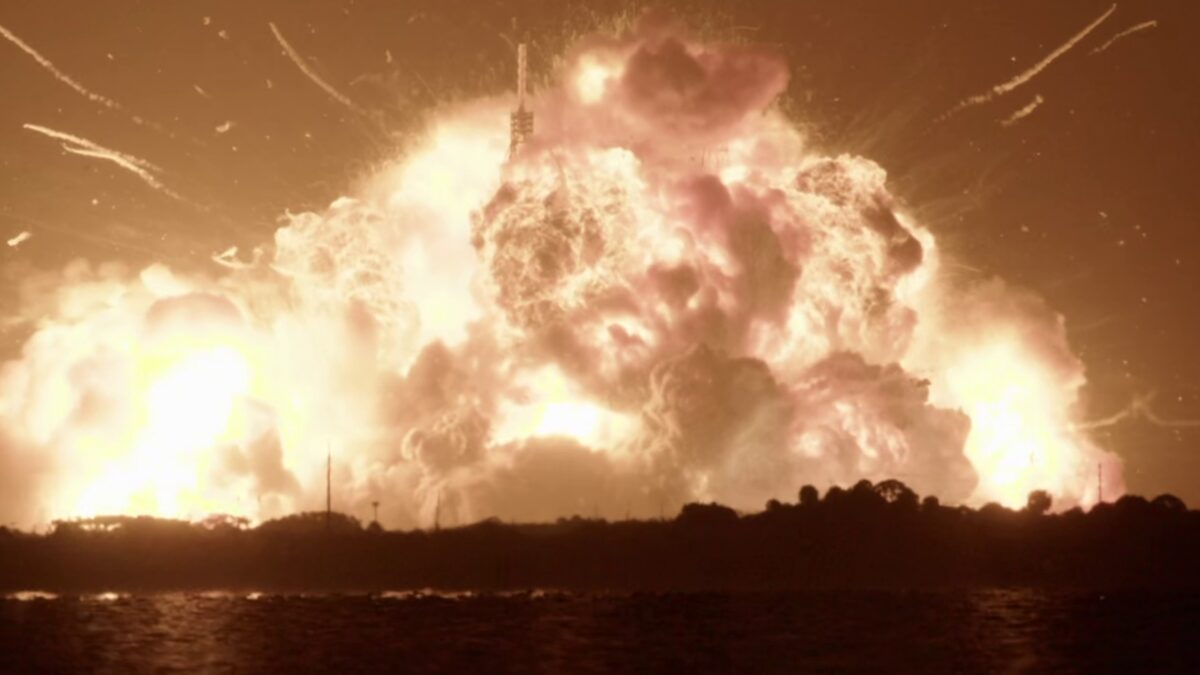
Blue Origin’s New Glenn rocket blew up Thursday night during a ground test at Cape Canaveral. The fully fueled vehicle was destroyed in a fireball at 9 p.m. EDT, one week before it was due to fly.
No one was hurt. But the explosion wrecked a rocket Jeff Bezos’ company had spent years building toward routine flight, gutted a launch pad, and pushed back a manifest that includes Amazon’s internet satellites and NASA lunar payloads. It is the worst single setback in Blue Origin’s 25-year history, and the cause isn’t yet known.
What we know
The blast happened during a static fire test at Launch Complex 36 at Cape Canaveral Space Force Station. Engineers were counting down to a brief firing of New Glenn’s seven methane-fueled BE-4 first-stage engines when the 188-foot booster caught fire, the upper stage tilted, and the whole stack detonated as its methane and liquid oxygen ignited, Spaceflight Now reported.
Here’s what’s confirmed so far:
- Everyone is safe. “We experienced an anomaly during today’s hotfire test. All personnel have been accounted for. We will provide updates as we learn more,” Blue Origin said in a post on X. Static fires are uncrewed ground tests, so the pad was clear.
- The rocket is gone. The overpressure event destroyed the vehicle, severely damaged the transporter-erector that holds it upright, and hit surrounding pad structures including a lightning tower, TechCrunch reported.
- It was a week from launch. The rocket was being readied for a flight as soon as June 4 carrying a batch of Amazon Leo internet satellites. That mission was the first of 24 planned Amazon Leo launches on New Glenn.
- Bezos responded fast. “Very rough day, but we’ll rebuild whatever needs rebuilding and get back to flying. It’s worth it,” he wrote, per Spaceflight Now.
This caps a rough stretch. New Glenn reached orbit on its January 2025 debut but lost the booster on landing. It nailed a booster landing in November 2025. Then in April 2026, the booster came back fine while a cryogenic leak froze a hydraulic line in the upper stage and stranded an AST SpaceMobile satellite. The FAA cleared New Glenn to fly again on May 22. Six days later, this happened.
What we don’t know
The root cause is open. “It’s too early to know the root cause but we’re already working to find it,” Bezos said. Blue Origin, the Space Force range, and partners are still combing through telemetry.
The timeline hit is the bigger unknown. A pad rebuild plus a failure investigation usually means months, not weeks, and Blue Origin only flies New Glenn from this one pad at LC-36. How far the June 4 Amazon Leo flight and the rest of the 24-mission queue slip depends on what the data shows.
There’s a wider question too. If investigators trace the failure to the BE-4 propulsion system, that reaches past Blue Origin. The same engine powers United Launch Alliance’s Vulcan, which uses two BE-4s per booster. A propulsion fault could ripple into ULA’s manifest, including national-security launches. No one has confirmed the engines are the culprit yet.
Source attribution
The event was covered live by TechCrunch, Spaceflight Now, CBS News, and Florida outlets including WFTV. Blue Origin confirmed the anomaly directly on X. NASA Administrator Jared Isaacman said the agency was aware of the event, adding: “Spaceflight is unforgiving, and developing new heavy-lift launch capability is extraordinarily difficult.”
What this means for you
If you track the launch market, the practical takeaway is timing. SpaceX still owns heavy-lift cadence, and every month New Glenn sits grounded is a month Amazon’s Leo constellation falls further behind Starlink’s head start. Bezos has the cash to absorb one lost rocket. What he can’t easily buy back is schedule.
Watch two things over the next few weeks. First, whether investigators point at the BE-4 engine. That’s the line between a Blue-Origin-only problem and one that drags ULA’s Vulcan into the same hole. Second, how fast LC-36 gets rebuilt, since it’s the only pad New Glenn has. A clean ground-system fix could mean a fall return. A propulsion redesign means 2027. Bezos says it’s worth it. The manifest will tell us whether the market agrees.
Share this article