Framework's Laptop 13 Pro is a ground-up redesign: aluminum, 20-hour battery, $1,199 DIY
Framework opened pre-orders for the Laptop 13 Pro on April 21. Panther Lake or Ryzen AI 300, LPCAMM2, a 74Wh battery, and Framework's first touch display.
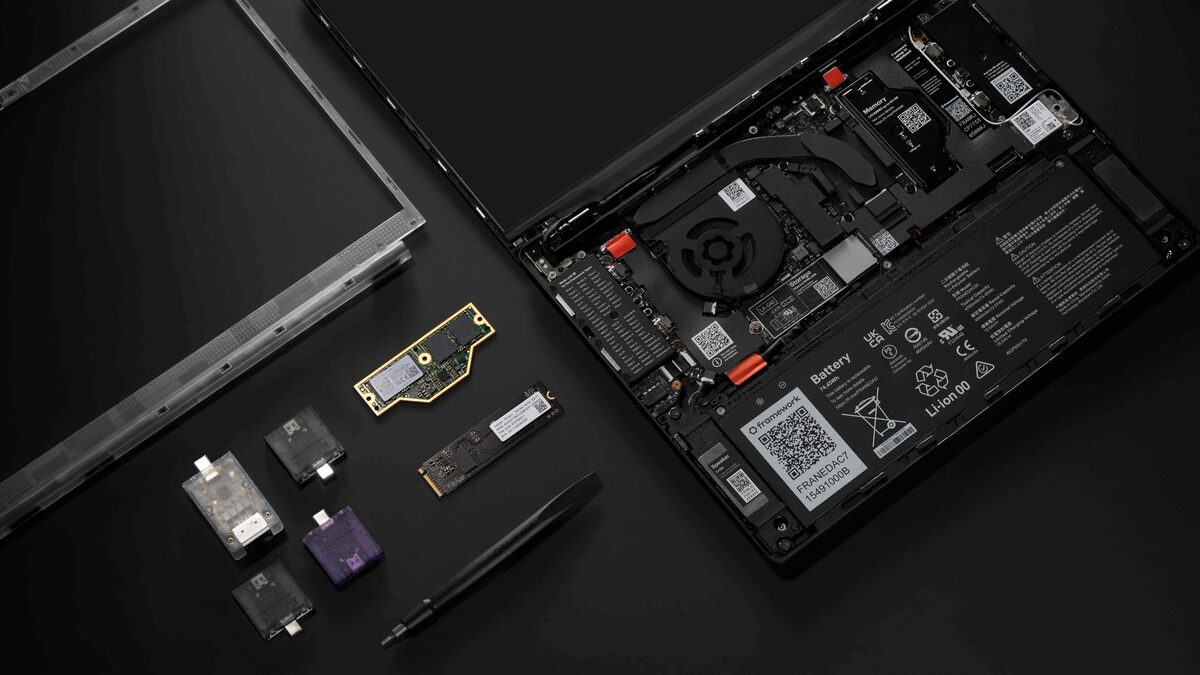
Framework opened pre-orders for the Laptop 13 Pro on April 21, and it’s the biggest redesign the company has done since it shipped the first Laptop 13 in 2021. New CNC aluminum chassis, a 74Wh battery, LPCAMM2 memory, a touch-capable 2,880x1,920 display, and a choice of Intel’s new Core Ultra Series 3 “Panther Lake” or AMD’s Ryzen AI 300. DIY Edition starts at $1,199.
What’s new
Framework is pitching the Laptop 13 Pro as its first machine that can credibly sit next to a MacBook Pro on a coffee-shop table and not look like the scrappier option. The tell is the chassis: the plastic top and bottom covers of the original Laptop 13 are gone, replaced by a full CNC aluminum build. Tom’s Hardware called it an attempt at a “MacBook Pro for Linux users”, and that framing is about right.
The other marquee changes:
- 74Wh battery, up from 61Wh on the outgoing Laptop 13. Framework is claiming over 20 hours of Netflix 4K streaming, which is the exact benchmark the 14-inch MacBook Pro M5 uses. That’s 12 hours more than the previous 13.
- LPCAMM2 memory modules. Soldered RAM has been the industry direction for a decade; Framework went the other way. LPCAMM2 is socketed LPDDR5X that matches solder-down performance, so you get user-upgradeable memory without the power penalty.
- 13.5-inch 3:2 touch display at 2,880x1,920, 30-120Hz variable refresh, 700 nits, 1800:1 contrast, per-unit color calibration. First touch panel Framework has shipped.
- Haptic trackpad driven by four piezo elements, paired with the mechanical keys from the Laptop 12.
- Dolby Atmos side-firing speakers, a fingerprint sensor, and a new black color option.
On the silicon side, the Intel configuration uses Core Ultra 5, X7, or X9 parts from the Series 3 “Panther Lake” family. The AMD configuration pairs the same chassis with Ryzen AI 300 Series processors. Phoronix confirmed Framework is offering Ubuntu pre-loaded on pre-built Intel models, which makes this the company’s first machine you can order with Linux in the cart instead of retrofitting it.
The prices and the ship window
Pre-orders are open now. First shipments start June 2026.
- DIY Edition, Core Ultra 5 325: $1,199
- DIY Edition, Ryzen AI 7 350: $1,399
- Pre-built Windows, 16GB/512GB: $1,499 (Intel) or $1,699 (AMD, per Engadget’s hands-on)
- Pre-built Windows, 32GB/1TB: from $2,099
That’s $200 above where the old Laptop 13 DIY started, for an aluminum chassis, double the battery life, a better display, and socketed LPDDR5X. The math tracks.
The repair promise is still intact
Framework’s whole reason for existing is that you can keep the machine forever by swapping parts. The Laptop 13 Pro is a ground-up redesign, which normally means “none of your old stuff fits,” but Framework’s event post confirms the new Laptop 13 is backward-compatible with expansion cards and modules from the previous generation. The mainboard from the Pro will also drop into the older Laptop 13 chassis for anyone who wants to upgrade the brain and keep the body.
Framework also used the event to refresh the Laptop 16 (new one-piece haptic touchpad/keyboard deck, a Ryzen 5 entry-point option, a new bezel color) and preview two accessories: an OCuLink Dev Kit for external-GPU builds and a Wireless Touchpad Keyboard for desktop use.
What this means for you
If you’ve been waiting for a Framework that doesn’t feel like a compromise, this is that machine. The aluminum body, the 74Wh battery, and LPCAMM2 are the three upgrades people have asked for in every forum thread for three years, and they all landed in one SKU. At $1,199 DIY it’s still in the same ballpark as the old model, which is the thing that keeps Framework interesting: the company made the laptop better without quietly pricing itself into MacBook Air territory. The real test will come in independent battery benchmarks, because “20 hours streaming 4K” is a vendor claim on a fresh battery in a controlled test. Watch the first Phoronix review for Linux support status on Panther Lake (Intel’s new graphics and NPU stack always takes a few kernel releases to fully land), and watch third-party trackpad reviews, since Framework is debuting its own haptic design here. For anyone on the original Laptop 13, the mainboard-upgrade path means you don’t have to wait. For anyone who’s been eyeing the repairable-hardware scene, this is the most mainstream proof yet that “modular” and “premium” aren’t mutually exclusive.
Share this article
Sources
- Framework Laptop 13 Pro and highlights from the Framework Next-Gen Event — Framework Blog
- Framework Laptop 13 Pro: Intel Core Ultra 3 & LPCAMM2 — Framework
- Framework Computer Announces The Framework Laptop 13 Pro — Phoronix
- Framework's overhauled Laptop 13 Pro brings a redesigned chassis — Tom's Hardware