Panic banned generative-AI art and audio from the Playdate Catalog. Code assistance still gets a pass.
The Playdate Catalog will no longer accept titles that use ChatGPT, Stable Diffusion, or Suno output for art, audio, text, or dialog. Existing titles get a label.
Panic killed generative-AI games on the Playdate Catalog. The studio’s updated developer policy took effect in April: the Catalog “will no longer accept titles that use ‘Generative AI’ for art, audio, music, text, or dialog.” Coding assistants like Copilot still get a pass, but a developer who used one has to say so on the public listing. Engadget’s Lawrence Bonk picked it up on May 1.
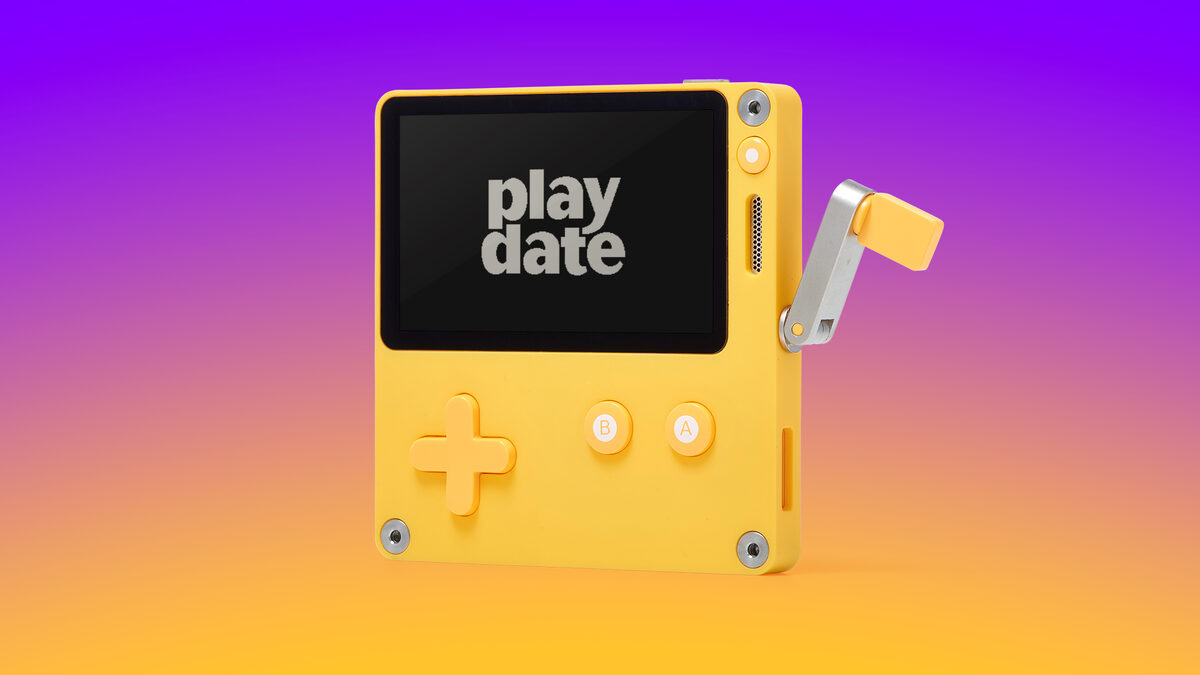
The Playdate is the small yellow handheld with the crank. It’s never been a mass-market device: Panic ships in seasons of 24 games, the Catalog is a curated marketplace, and the entire ecosystem fits on one shelf. That’s exactly what makes the policy a useful signal. A larger storefront couldn’t enforce this with a straight face, because the volume of generative content in the queue is already too high to vet. Panic can. And Panic is willing to.
What the disclosure form actually requires
Panic’s policy lives in a single help-center document. The full prohibition reads: the Catalog “will no longer accept titles that use ‘Generative AI’ for art, audio, music, text, or dialog.” The named tools include ChatGPT and Google Gemini for text, image generators like Stable Diffusion and Midjourney, plus audio tools Suno and Udio. The list is not exhaustive, and Panic notes the guidelines are “subject to change at any time.”
What stays allowed:
- Custom-written in-game behavior functions. “Enemy AI” in the classic gamedev sense, the kind you write in Lua to make a goblin chase the player, is fine. The policy is about training-data-derived generative output, not algorithmic game logic.
- Coding assistance. Tools like Copilot or Claude Code can be used to write game code, with a disclosure. Panic gives “Lua debugging” as the example label.
- Existing approved titles. Previously released Catalog games that used generative AI stay on the store but get flagged with usage details. New submissions in season three onward have to comply.
The disclosure mechanism is a questionnaire developers fill out as part of the Catalog Assets form. The answer becomes a public label next to accessibility and rating disclosures. Games that don’t fill in the questionnaire get a default label: “This game’s developer hasn’t reported on its use of generative AI.” Panic says the form itself is updating in June 2026.
Why a curated indie storefront can do this when Steam can’t
Volume is the answer most people skip. Steam takes thousands of submissions a month and would need a dedicated review team to detect generative content at scale. Apple and Google each ship millions of apps. Panic ships dozens. A reviewer at Panic can open a submission, look at the art, listen to the audio, and decide whether the disclosure is plausible. That’s not a process that scales to Steam.
The other reason is brand alignment. Panic is the studio behind Firewatch and Untitled Goose Game, and the Playdate is sold partly as a craft object. Buyers self-select for hand-made aesthetics. A generative-AI Stable Diffusion sprite sheet on a $179 hardware product whose entire pitch is craftsmanship would feel like a category mismatch. Panic is enforcing the value proposition the hardware is sold under, which is a different kind of policy than a general-purpose marketplace can defend.
There’s also the legal posture. Generative training data is the open question of 2026, with hyperscalers spending $700 billion on AI infrastructure while courts work through what training on copyrighted material means downstream. A small storefront doesn’t want to be the test case. Refusing AI-generated content removes the question entirely.
What this signals to the rest of indie
Itch.io did something similar in 2023, with developers asked to flag AI use and some games refused. Steam runs a disclosure system and refuses outright when training data sourcing can’t be proven. Nintendo’s eShop has stayed quiet. Panic is now the first hardware platform-holder to draw a hard line on its first-party storefront. That’s the kind of move that gives smaller publishers cover to follow.
The risk is that the policy creates a black market. A developer who used Stable Diffusion for placeholder concept art and then redrew the final assets has a defensible workflow. A developer who used ChatGPT to write the game’s intro text and then heavily edited it has a fuzzier case. Panic’s questionnaire forces self-reporting, and self-reporting in a competitive marketplace is exactly the kind of incentive that produces strategic ambiguity. Whether the policy works will turn on whether Panic enforces it consistently when borderline cases come up, not on what the rules say on paper.
What this means for you
If you’re a Playdate developer with a season-three submission in flight, fill out the disclosure. The default label is harsher than honest disclosure of coding-assistant use, and an undisclosed AI workflow that gets caught later is the worst possible outcome.
If you’re an indie developer on any platform, the right read is to check your storefront’s terms before the next sprint. Itch, Steam, and Apple all have policies that have shifted in the last 12 months. The default of “post-and-figure-it-out-later” is no longer a safe play.
If you’re a player who cares about hand-made games, the Playdate Catalog is the most reliable signal you can buy right now. Whether the same trust is portable to other storefronts is the bet to watch over the next 18 months.
Share this article