Sam Altman's Orb is now your Tinder badge. World goes mass-market.
World ID is rolling out to Tinder US, Zoom, Shopify, DocuSign, and Okta. Tools for Humanity is betting iris scans solve the bot problem.
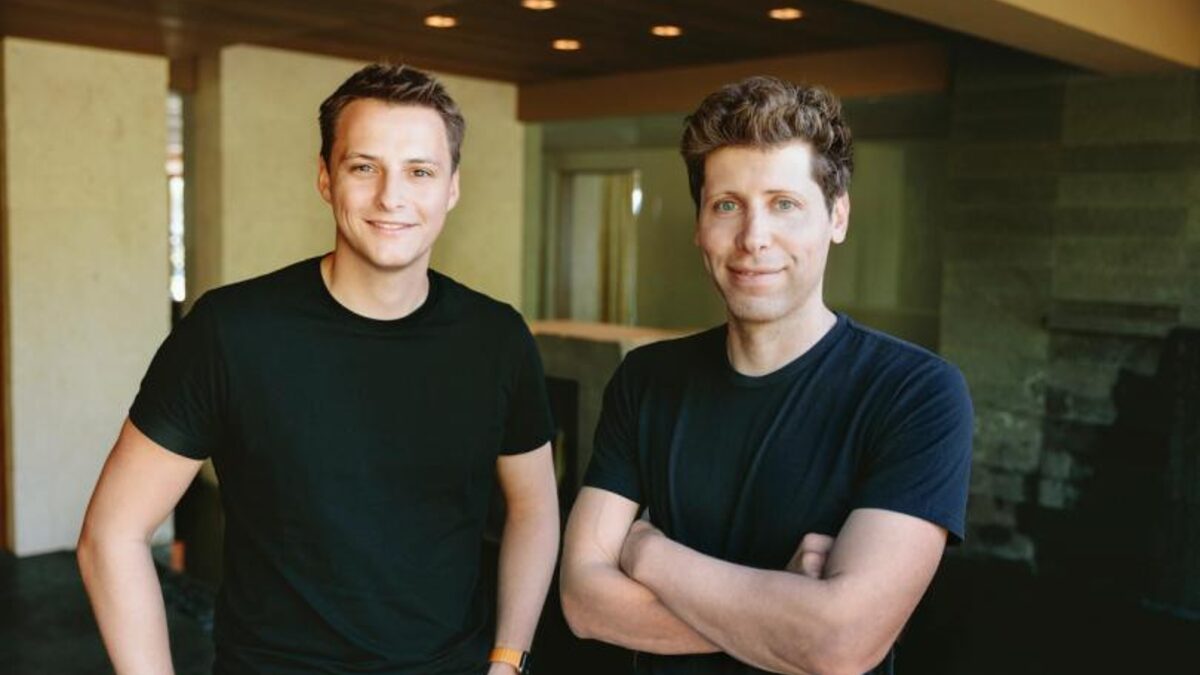
Sam Altman’s other company, Tools for Humanity, just made its biggest push to put iris scans into mainstream consumer life. TechCrunch reports that World ID is now integrated with Tinder in the US, plus Zoom, Shopify, DocuSign, Okta, and asset manager VanEck. It’s the first time the Orb network is being pitched as identity infrastructure for products people actually use.
What we know
- Tinder US is the headline integration. Profiles that link a verified World ID get a badge in the app and five free “Boosts” as the carrot, per TechCrunch. The Japan pilot, which launched in 2025, now expands to US users.
- Zoom uses World ID to mark verified humans in meetings, an explicit deepfake countermeasure as live-call AI impersonation grows, Axios reports.
- Shopify, DocuSign, Okta, VanEck are all signing on, mostly as identity-attestation customers for high-friction flows: account recovery, contract signing, retail anti-fraud, per Axios.
- A new “low friction” tier lets people verify with a selfie instead of an Orb scan. Tools for Humanity calls it explicitly “low security” but high accessibility, TechCrunch notes.
- Orb saturation is being expanded in NYC, LA, and SF, the markets Tools for Humanity is targeting first for US scale.
- Engadget surfaces an additional pitch: ticket scalping. Tools for Humanity wants World ID gates on Ticketmaster-style queues to stop bot purchases of concert tickets, per Engadget.
What we don’t know
- Match Group’s contractual terms with Tools for Humanity. Is Tinder paying per verification, paid in equity, paid in nothing because the bot problem is bad enough that distribution alone is the deal?
- How the “low security” selfie tier interacts with the cryptographic claims World ID makes about uniqueness. The whole pitch of the Orb is that the iris scan generates a one-per-human identifier; a selfie tier weakens that guarantee, and the spec sheet doesn’t yet say how.
- Regulatory exposure. Several EU countries (Spain, Portugal, Germany) have ordered Tools for Humanity to suspend Orb operations or delete biometric data. Brazil and Hong Kong have similar orders. None of those rulings have been resolved.
- Whether Tinder’s badge is opt-in for the matched-with side. If you swipe right on a non-verified profile, do you see that they’re not verified, or does the badge only appear on verified ones?
Sources
TechCrunch and Axios both ran the announcement on Friday with the same partner list and the same on-record source: Damien Kieran, Tools for Humanity’s chief privacy officer. CoinDesk added the financial-product angle (VanEck is using World ID for KYC on a tokenized fund). Engadget zeroed in on the ticketing pitch. None got Sam Altman on the record himself; this is a Tools for Humanity press cycle, not an OpenAI one.
What this means for you
If you use Tinder in the US, expect verified-only filter options to appear within the next few months. The badge is the soft launch; “show me only verified profiles” is the inevitable product. That’s good for cutting catfishing and bot accounts, and it’s a meaningful concession to give one company a biometric scan of your eye for. The trade isn’t crazy. It’s also not reversible: once the iris hash is generated, it’s the same hash forever, and Tools for Humanity controls the registry. If you’re comfortable with that, the Orb is the strongest “you are a unique human” signal that exists at consumer scale right now. If you’re not, the new selfie tier exists for a reason, but its security guarantees haven’t been published. The honest framing: this isn’t a technology question, it’s a trust question. Decide who you trust with the data, then decide whether the badge is worth it.
Share this article
Sources
- Sam Altman's project World looks to scale its human verification empire. First stop: Tinder. — TechCrunch
- Sam Altman's World partners with Zoom, Tinder to prove who's human online — Axios
- Sam Altman's World project launches major upgrade to fight deepfakes and bots — CoinDesk
- Sam Altman's human verification company thinks its eye-scanning orbs could solve ticket scalping — Engadget