Samsung is building Galaxy Book laptops with Android, not Windows. Three tiers are in the works.
SamMobile reports Samsung is preparing low-end, mid-range, and flagship Galaxy Books on Android 17 One UI 9, timed to Google's Aluminium OS push at I/O 2026.
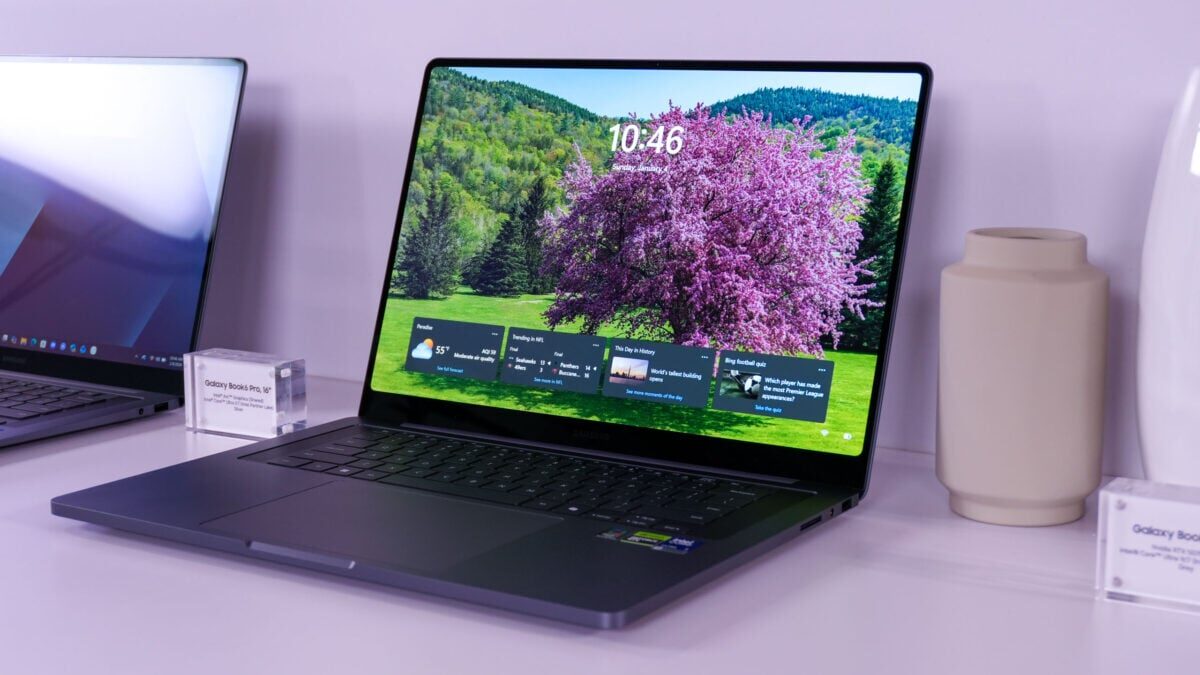
Samsung’s next Galaxy Book laptops will run Android, not Windows. SamMobile’s Asif Iqbal Shaik reported on May 2 that three Galaxy Book models are in development on Android 17-based One UI 9. If the report holds, the lineup launches before the end of 2026.
The timing isn’t accidental. Google is expected to debut Aluminium OS, the Android-based replacement for ChromeOS, at Google I/O later this month. SamMobile says Samsung’s Galaxy Books will run “Android 17-based One UI 9 software” on top of that stack, with Galaxy AI integration and an upgraded Samsung DeX taking the place of Windows productivity. It’s the first time a major OEM has telegraphed a Windows exit on its mainstream notebooks.
The move puts real pressure on Microsoft. Samsung is the largest Android OEM in the world, and a Galaxy Book that doesn’t pay for a Windows license is the first crack in a wall that’s held since the 1990s. The Galaxy Book today is a mid-tier Windows machine for buyers who already own a Galaxy phone; the rumored line keeps the same buyer but routes them away from Redmond.
What SamMobile says is in the lineup
Samsung’s plan, per the SamMobile report, covers all three Galaxy Book tiers. The flagship is described as having “a very sleek design,” with the company allegedly chasing the MacBook on industrial design:
- Low end. A budget machine with Galaxy AI features and DeX productivity, presumably aimed at students and ChromeOS-curious buyers.
- Mid range. The volume model. Galaxy AI plus an upgraded DeX that gives Android desktop-class window management, scaled up for a 13- or 14-inch screen.
- Flagship. Samsung is reportedly going after MacBook buyers with a “very sleek design,” though the report flags that Samsung may revise the industrial design before launch.
What’s missing from the report is a release window for any specific SKU. SamMobile’s framing is that the announcement could land before year-end, with Google’s Aluminium OS reveal at I/O acting as the trigger. None of the three machines is described as shipping at I/O itself.
The Android shift on a laptop isn’t quite a clean break from Samsung’s existing software story. Galaxy AI already lives on Galaxy phones, the Galaxy Watch line, and Galaxy Tab tablets, so a Galaxy Book running One UI 9 fills the one obvious gap in the line. DeX has been the productivity story Samsung has rehearsed for almost a decade. The Galaxy Book is where it finally shows up running on the same OS as the phone in your pocket, instead of as a phone-projected secondary mode.
Why drop Windows now
Three things lined up. Aluminium OS gives Google a fresh OS to pitch to OEMs; ARM laptop silicon is real enough that Apple’s M-series has a five-year head start and Snapdragon X has finally caught up; and Samsung already controls the entire stack from the panel to the SoC to the OS layer. The one piece Samsung has been renting from Microsoft is the OS. Google’s Android desktop push is the first credible alternative since ChromeOS itself, and it inherits the entire Play Store and a billion-plus-device app ecosystem on day one.
The risk is the same one ChromeOS has fought for 13 years: enterprise. Most Galaxy Book buyers today need to open Excel files that were written in 2019, run a VPN client a security team picked years ago, and connect to a printer driver that lives on a SharePoint somewhere. Android-on-laptop has to answer those questions before it shows up at a Best Buy display. SamMobile doesn’t say how Samsung plans to bridge that gap, and Aluminium OS itself is unannounced, so the compatibility story is the open question.
There’s also the developer story. The MacBook benchmark Samsung is reportedly chasing isn’t just a hardware design language; it’s an installed base of native developer tools. Android Studio, Termux, and ADB are real, but JetBrains, Docker Desktop, and most of the IDEs that ship a Linux flavor don’t ship for Android-on-ARM-laptop. Samsung will have to convince Google’s Aluminium team to land a Linux compatibility layer if the flagship is going to compete with Apple’s $799 Mac mini on developer mindshare.
What this means for you
If you’re shopping for a Windows laptop in the next six months, this report doesn’t change anything. The 2026 Galaxy Book lineup that’s already shipping stays on Windows; SamMobile is talking about a fork of the line that arrives later this year. Wait if you can, but don’t put off a purchase indefinitely.
If you’re a long-time ChromeOS user, this is the announcement worth watching at I/O. Aluminium OS is supposed to keep the things ChromeOS got right (auto-updates, fast boot, sandboxed apps) while inheriting the Android app library. A Samsung Galaxy Book running it would be the most credible mainstream-OEM Android laptop ever shipped.
If you’re a developer, the question is what Aluminium OS does for Linux app compatibility. Until Google says, treat this as a consumer story, not a workstation one. The MacBook flagship comparison Samsung is reaching for needs developer tooling parity, and the SamMobile report doesn’t promise that.
If you’re a Samsung shareholder, the question isn’t whether the Galaxy Book line ships on Android. The question is whether SamMobile’s report is two months early or two years early. Watch I/O for the Aluminium OS reveal, and watch Samsung’s Q3 product calendar for the first SKU.
Share this article