Trump fired the entire National Science Board. The body that signs off on $9B in NSF funding is gone.
All 24 NSB members got termination emails on April 24 from the presidential personnel office. The board approves NSF's largest grants and sets policy. It is now empty.
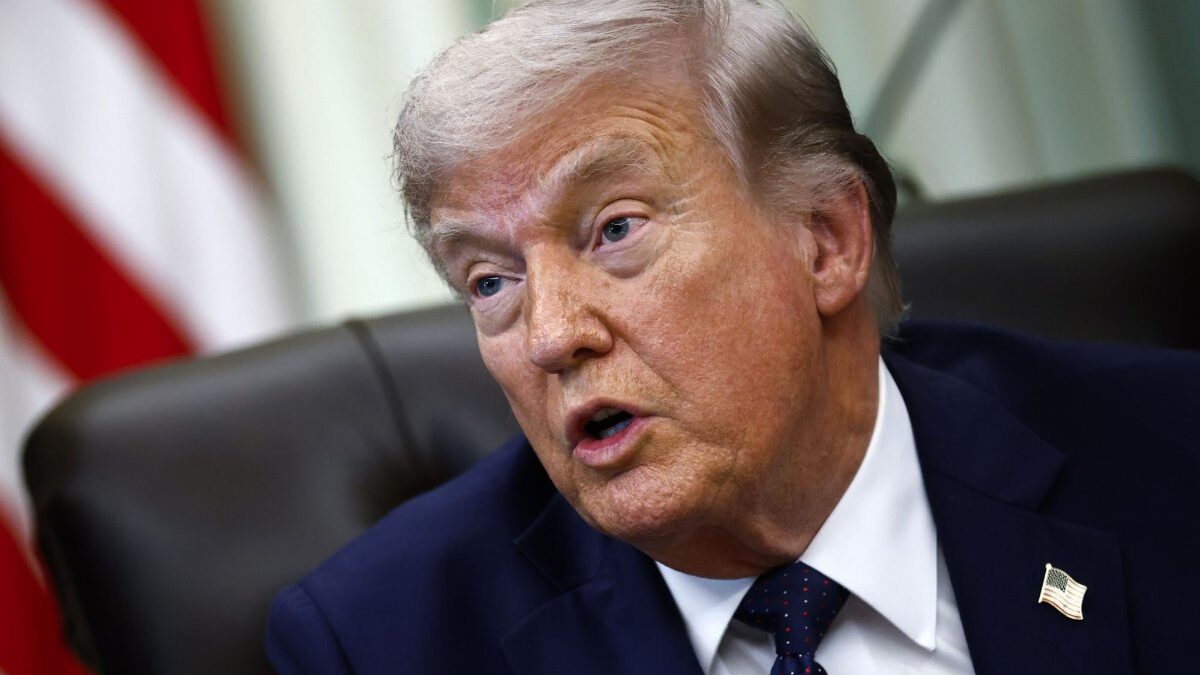
On Friday, April 24, every member of the National Science Board, all 24 of them, received an email from Mary Sprowls of the presidential personnel office stating that “your position as a member of the National Science Board is terminated, effective immediately.” The body that has approved every NSF grant over $50 million for 76 years, and that statutorily oversees the agency’s roughly $9 billion research budget, was emptied with a single round of emails.
What the NSB actually does
This is the part that doesn’t make the political headline but matters for anyone who reads NSF’s name on a research paper. The NSB isn’t an advisory committee that issues white papers. It has statutory authority:
- Approves NSF awards over $50M. Large multi-institution programs (the AI Research Institutes, the Major Research Instrumentation grants, the LIGO operating budget, the quantum information science centers) need an NSB sign-off. With no board, there is no body legally able to approve these grants until members are reinstated.
- Sets policy for the agency. Funding rate targets, priority areas, the merit-review process: these are NSB-approved.
- Serves as the public face of NSF science. The board’s biennial Science and Engineering Indicators report is the canonical dataset for US R&D spending, workforce, and competitiveness.
- Designed to outlast administrations. The board’s 24 members serve six-year terms, staggered so a third rotate out every two years. The structure is deliberate: presidents appoint, but the body crosses administrations precisely so it doesn’t swing with every election cycle. That design was created in 1950 and has held for 76 years.
The administration retains the power to appoint new members. The empty seats can’t sign grants in the meantime. That gap matters.
The reaction so far
Science magazine reported the firings the same day, and House Science Committee ranking Democrat Zoe Lofgren issued a statement calling it “the latest stupid move made by a president who continues to harm science and American innovation,” noting the administration “has attacked NSF from day one.”
The substantive critique from outside science advocacy: the firings don’t trigger an NSB replacement under any rapid mechanism. Senate confirmation isn’t required for new appointments, but the recruitment, vetting, and onboarding cycle for a 24-person board normally runs months. Until then, large NSF grants that need board approval can’t move.
The administration has not yet named replacement appointees. The White House did not respond to UPI’s request for comment on the email or the timeline for new nominations.
What’s at stake for tech research
For DevTake’s audience, the operationally interesting question isn’t the politics; it’s which research streams NSF supplies, and what happens to them in a months-long board vacancy:
- AI research infrastructure. The National AI Research Resource (NAIRR) and the AI Research Institutes program both run on NSF money. A frozen NSB stalls the next funding round.
- Quantum. NSF’s quantum information science centers operate on multi-year funding cycles that need board sign-off at renewal.
- Computer-science workforce. Most US PhD students in CS, statistics, and applied math whose stipends come from grant lines are downstream of NSF’s CISE directorate budget, which the board sets.
- Open-source science software. Many of the long-running CS infra projects (parts of LLVM tooling, scientific Python ecosystem maintenance, GitHub-hosted research tools) are partially NSF-funded through the Pathways to Enable Open-Source Ecosystems (POSE) program. Those grants don’t disappear; their renewals need a quorum-having NSB.
This is a different concern from the broader question of whether NSF funding levels will fall. That’s a budget fight, not a board-vacancy issue. The board issue is procedural, and it’s measured in months of delay, not dollars cut.
Why this isn’t priced in yet
There is no market reaction to NSB news in the same way there is for Fed firings or CEO transitions. Tech labs and CS departments don’t move on a news cycle; they move on award letters arriving in the mail (or, more accurately, in the FastLane portal). The operational hit shows up over the next two grant cycles, not next week. That’s why the industry response has so far been mostly silent: principal investigators are watching their FY26 award letters, not press releases.
The closest analog is the Virginia data-center voter-support collapse: a slow-moving political shift that doesn’t show up in earnings until the rate-case decisions land months later. Same dynamic here.
What this means for you
If you depend on NSF money, your action is to call your program officer this week and ask three things: whether your renewal needs board approval, whether your PO has guidance on continuing-resolution rules for awards already in flight, and whether the agency has set a target date for board-replacement timing. None of that is a guess; it’s information your PO has by Wednesday or doesn’t.
If you’re an open-source maintainer downstream of NSF money (the SciPy ecosystem, parts of Jupyter, several Python data-tooling projects), the question is whether the upstream grant covering your maintenance is in renewal this fiscal year. If it is, plan for delay, not cancellation. If you’re at a company that hires from CS PhD pipelines, expect a slightly tighter market in the next year as fewer ABD students land grant-funded summer positions and more enter industry early.
My read: the procedural blast radius is large, the political blast radius is being argued over, and the tech-research blast radius is real but slow. Refilling the board takes months, not years. The damage piles up in that gap. We won’t see the shape of it until grant cycles try to clear the empty room.
Share this article
Sources
- Trump fires NSF's oversight board — Science / AAAS
- Trump administration fires National Science Board members — UPI
- White House Fires Entire National Science Board, Raising Questions Over $9 Billion Federal Research Pipeline — Business Times
- Ranking Member Lofgren Reacts to Latest Trump Scheme to Undermine Science — House Science Committee Democrats