Commerce will take equity in nine quantum companies. $2 billion is moving in exchange.
On May 21 NIST disclosed nine letters of intent worth $2.013B for IBM, GlobalFoundries, and seven quantum labs. Each comes with a minority federal stake.
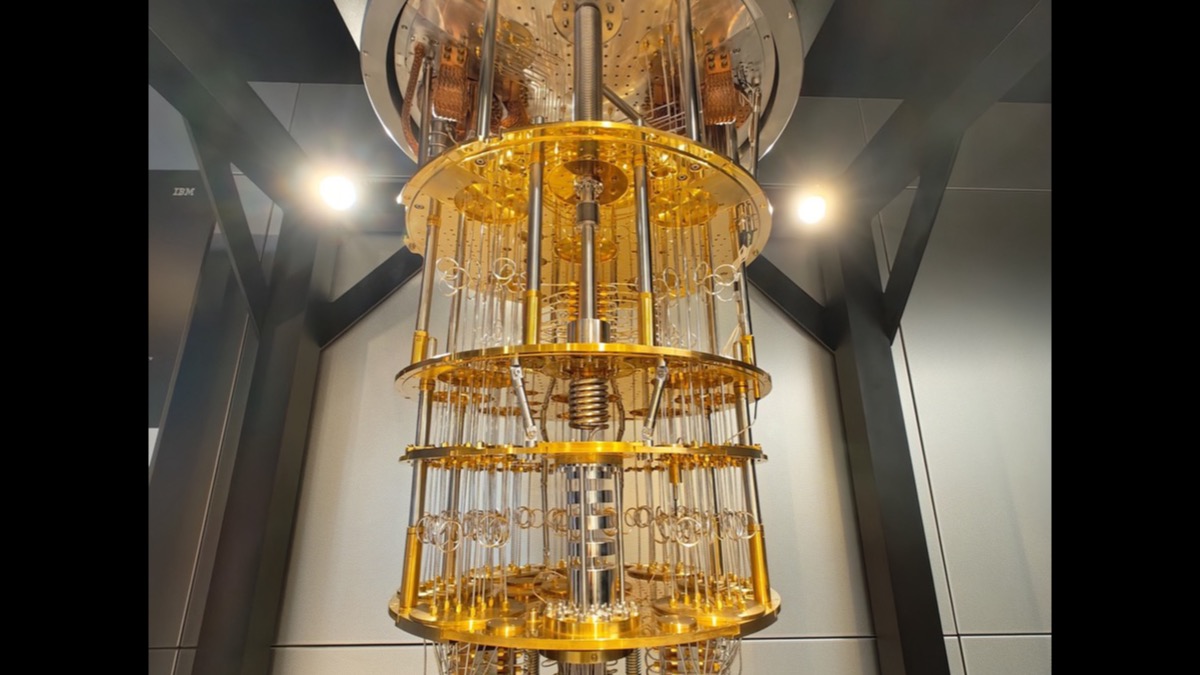
The U.S. Department of Commerce signed nine letters of intent on May 21 that move $2.013 billion in CHIPS Act incentives to quantum computing firms. IBM gets the headline check. Every recipient hands the federal government a minority equity stake in exchange.
The structure is what makes the package unusual. Past CHIPS awards moved as grants and loans with conditional milestones. This one reads more like a sovereign wealth fund placement on top of the grant, with NIST acting as the issuing desk. The administration has run a similar play in semiconductors and rare earths over the past four months. Quantum is the third sector to draw the structure, and it’s the first in which the recipient list includes both the upstream foundry layer and four pure-play startups whose entire valuation is the technology.
Who gets what
The NIST announcement breaks down the nine letters across two foundries and seven computing firms.
- IBM: ~$1 billion. Pairs with a $1 billion company commitment toward a domestic quantum chip-manufacturing facility called Anderon.
- GlobalFoundries: ~$375 million. IBM’s foundry partner. The company told reporters the federal equity stake lands at roughly 1%.
- D-Wave Quantum: ~$100 million.
- Rigetti Computing: up to $100 million.
- Infleqtion: ~$100 million.
- PsiQuantum: ~$100 million.
- Quantinuum: ~$100 million.
- Atom Computing: ~$100 million.
- Diraq: up to $38 million.
Shares of the publicly traded recipients moved between 7% and 21% in premarket trading the morning after the disclosure, per Reuters wire copy carried by The Quantum Insider. IBM closed up 12%.
What the equity language actually does
Commerce Secretary Howard Lutnick framed the package in the NIST release as a policy bet: “With today’s CHIPS Research and Development investments in quantum computing, the Trump administration is leading the world into a new era of American innovation.” Bill Frauenhofer, NIST’s executive director for semiconductor investment, added that the awards “strengthen and accelerate U.S. leadership across multiple quantum modalities at once.”
The equity language sits inside the same paragraph. “The Department will receive a minority, non-controlling equity stake in each company as a condition for receiving the funds to enhance the return for the U.S. taxpayer,” the release reads. No specific percentages are listed for any company other than GlobalFoundries, which volunteered the 1% figure to its shareholders. The other eight haven’t disclosed.
For the publicly traded recipients, the stake hits the cap table immediately and shows up in the next 10-Q. For privately held companies like PsiQuantum and Atom Computing, the stake creates a federal seat at the table the next time they raise. Series E rounds at PsiQuantum priced last year against the $9 billion private valuation reported by Bloomberg; a federal 1-to-3% wedge changes how every term sheet from here reads.
What we don’t know
- The exact stake size for the seven private-and-publicly-traded computing firms. Only GlobalFoundries has confirmed a number. The 8-Ks D-Wave and Rigetti filed on May 22 confirm the cash but not the equity ratio.
- Whether the stakes are voting or non-voting. “Non-controlling” is the only qualifier in the release. That covers a lot of ground.
- The disbursement timeline. The release calls these “letters of intent,” not contracts. Final awards typically follow a 60-to-120-day diligence window.
- How the modalities mix. The seven computing-firm recipients run on superconducting (IBM, Rigetti), trapped ion (Quantinuum), neutral atom (Atom Computing, Infleqtion), photonic (PsiQuantum), silicon spin (Diraq), and annealing (D-Wave). Funding four-plus competing approaches at once is policy as portfolio bet, not a winner pick.
What this means for you
If you build cryptographic systems, the timeline pressure on post-quantum migration just got real money behind it. The federal government is now an investor in the companies building the machines that would break RSA and elliptic-curve crypto if and when they scale, which sharpens every “Q-Day by 2029” memo on the desk of a security team. The post-quantum mainlining and formal-verification work that landed in tools the past quarter is the right shape; the question is how fast it propagates to the long tail of TLS terminators, VPN appliances, and signed firmware that still ride classical curves.
If you work near venture-backed quantum, expect a quieter Series E season. Federal money is patient, but a federal cap-table seat is not. New investors will price differently against a non-controlling government stake than against a clean preferred stack. Watch how the next priced round at Rigetti settles for the leading edge of that repricing.
Share this article
Sources
- Department of Commerce Announces Letters of Intent With 9 Companies for $2 Billion to Accelerate U.S. Leadership in Quantum Computing — NIST
- U.S. to take equity stakes in quantum computing companies — Axios
- Commerce Department announces $2B for 9 companies under CHIPS Act — Manufacturing Dive
- IBM lands $1bn as US backs nine quantum companies for $2bn — The Next Web