OpenAI's Codex moved into the ChatGPT mobile app. You can approve a diff from the train now.
OpenAI shipped Codex remote control inside the ChatGPT app for iPhone, iPad, and Android on May 14. Pair via QR; the agent runs on your laptop, the review moves to your phone.
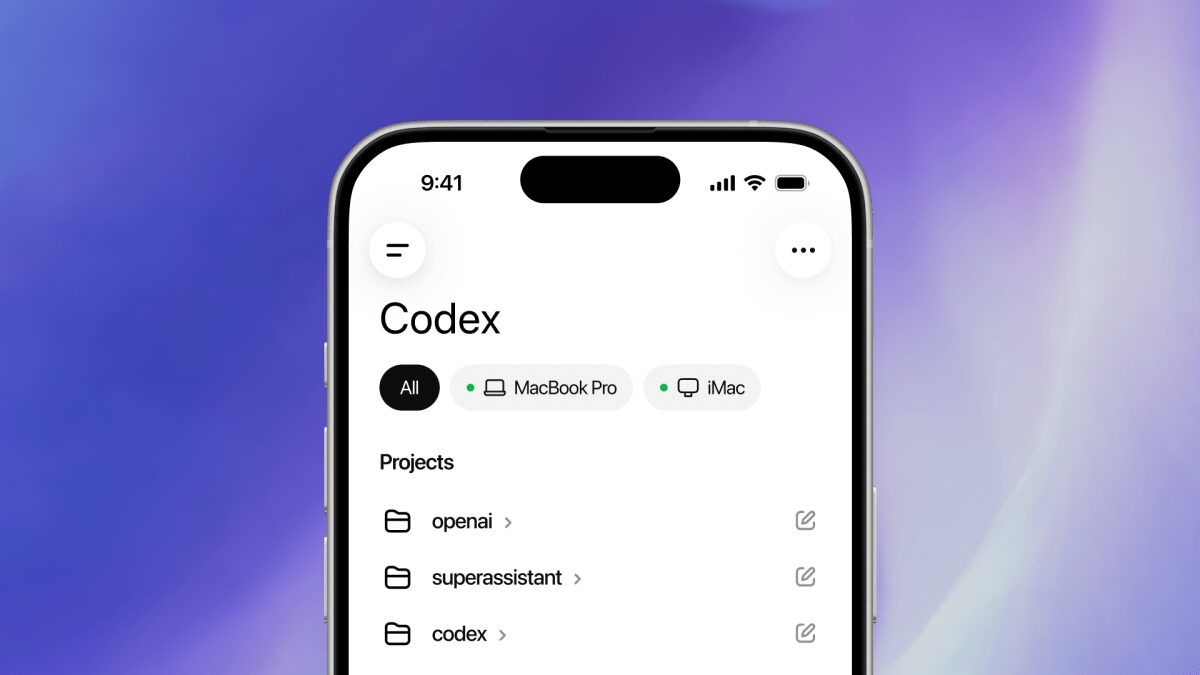
OpenAI rolled out Codex inside the ChatGPT app for iPhone, iPad, and Android on May 14, as a preview available on all paid ChatGPT plan tiers. The setup is a QR-pair flow with the Codex Mac app, the agent stays on the laptop where the code lives, and the phone becomes a live read-and-approve surface for whatever the agent is doing.
OpenAI’s own framing in the launch post: “From your phone, you can work across all of your threads, review outputs, approve commands, change models, or start something new.” That sentence is doing two jobs. It tells developers the phone is for governance, not for typing. And it tells Anthropic that the surface Claude Code carved out in February is officially contested. Both companies now ship phone-side approval. The difference is whose laptop the agent runs on.
What we know
OpenAI’s product page, plus matching write-ups from TechCrunch and 9to5Mac, line up on what shipped on May 14.
- The pair. Scan a QR code shown in the Codex Mac app and your phone is bound to that machine. From the mobile thread, you can view live Codex environments, switch models, review test results, scroll diffs, and approve commands. Files, credentials, and shell permissions stay on the host; the phone gets streams, not local access. The QR step is what avoids the “copy your credentials onto your phone” failure mode.
- What rides the wire. Screenshots, terminal output, diffs, test results, and approval prompts. The flow OpenAI describes in its post: “answer a question, review what Codex found, change direction, approve what comes next, or add a new idea.” It’s read-and-steer, not phone-side execution.
- Who gets it. OpenAI told TechCrunch the preview is “accessible to all ChatGPT plan tiers” on both platforms. The mobile app is the same ChatGPT app shipping for the last two years; the Codex panel turns on once the QR pair completes.
- Windows. Not on day one. OpenAI says Windows support for remote Codex control is “coming soon”; the QR-pair flow is Mac-only at launch.
What we don’t know yet
A few details OpenAI didn’t put on the record at the May 14 launch.
- Background execution. The phone surface assumes the laptop is awake and Codex is running. There’s no statement about whether a sleeping or lid-closed Mac keeps a Codex session warm for a phone reconnect; the Mac app’s background-execution feature shipped in April but mobile pairing on top of it isn’t fully documented.
- Voice and notifications. Neither announcement mentioned voice prompts to Codex or push notifications when an approval is needed. Both are obvious next features and obvious holes in the current preview.
- Pricing. Codex has been on the new ChatGPT credit-based pricing since late April. OpenAI didn’t say whether mobile sessions consume credits at the same rate, or whether the QR pair counts as a single session for billing.
How it stacks against Claude Code
This is a direct response to Anthropic. Anthropic shipped “Remote Control” for Claude Code in February 2026, with effectively the same pitch: keep the agent on your dev box, watch and approve from the phone. The shapes are converging. The differences as of today:
- Claude Code’s remote surface lives inside Claude’s mobile app, not a separate coding-agent app. OpenAI uses the same pattern: it’s a panel inside the existing ChatGPT app, not a standalone Codex iOS app.
- Claude Code’s flow assumes the developer is the only person controlling the agent. OpenAI explicitly markets the mobile experience as supporting handoff between collaborators: one teammate prompts from the laptop, another reviews from the phone. That’s an organizational pitch, not a personal-productivity one.
- Neither product is positioning the phone as the execution surface. Both keep code on the laptop. The phone is governance.
The thing that’s actually new about this release isn’t the technology. It’s that both market leaders now agree the device a developer uses to approve code is decoupling from the device that writes it. That’s a workflow assumption with downstream implications for how IDEs, code review tools, and notification systems get built over the next year.
What this means for you
If you already use Codex, install or update the ChatGPT app on your phone and run the QR-pair once. The friction is small and the upside (catching a failing test before you walk back to your desk) is real. The honest constraint is that any sufficiently autonomous coding agent will eventually do something destructive while you’re away from the keyboard. The mobile surface makes that easier to catch in 30 seconds and harder to catch in 30 minutes; weight your auto-approve rules accordingly.
If you don’t use Codex, this isn’t the release that changes that calculus. The mobile app is a steering wheel, not a new engine. The question of whether OpenAI’s coding agent is the one you want is the same question it was a week ago. What changed is that the answer travels with you now.
Share this article
Sources
- Work with Codex from anywhere — OpenAI
- OpenAI says Codex is coming to your phone — TechCrunch
- OpenAI brings Codex control to ChatGPT for iPhone, iPad, and Android — 9to5Mac
- OpenAI's Codex is now in the ChatGPT mobile app — The Verge