The White House just cut five years off America's quantum crypto deadline
A new executive order moves the federal post-quantum migration from 2035 to 2030, binding agencies and contractors. Here's what changed and what to do now.
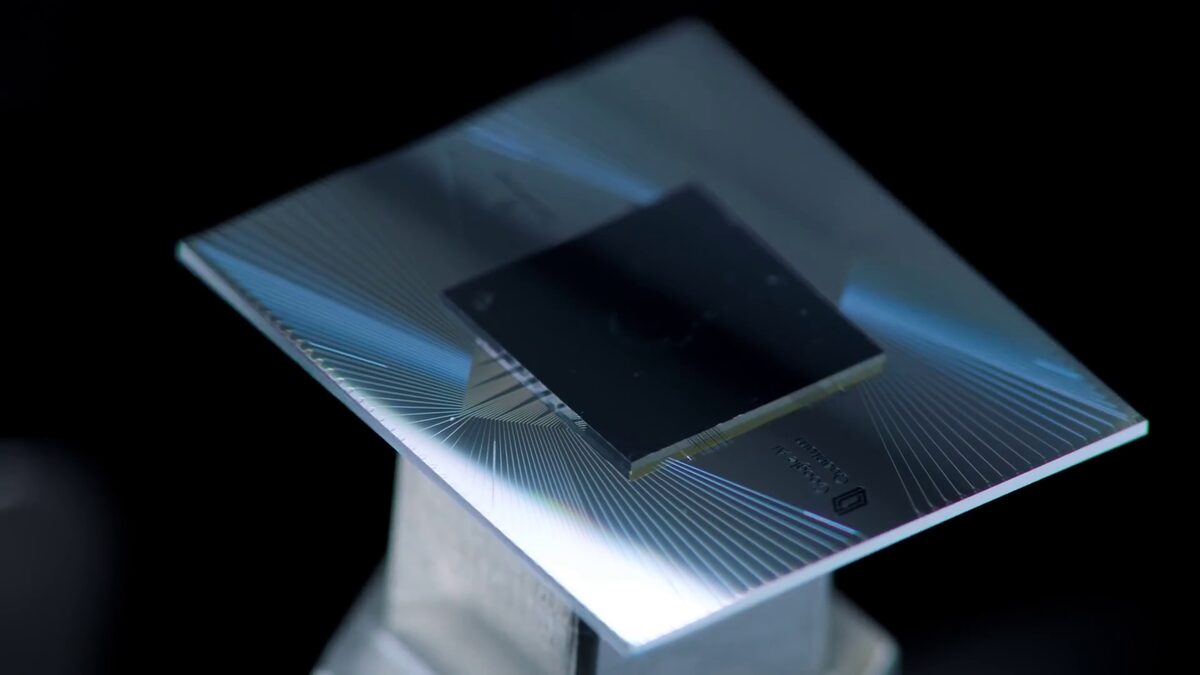
The White House just told every federal agency to stop waiting on the quantum threat. Executive Order 14412, signed June 22, pulls the deadline to abandon quantum-breakable encryption forward by about five years. Agencies that were planning around a 2035 horizon now have until the end of 2030.
That’s a big swing for a migration most of the government has barely started. The order, titled “Securing the Nation Against Advanced Cryptographic Attacks,” doesn’t just nudge a date. It reframes the whole problem as a present-tense risk, sets hard deadlines for agencies and their contractors, and points everyone at the same set of NIST-standardized algorithms. If you build software, sell to the government, or just care about whether your traffic stays private a decade from now, the timeline you were quietly ignoring just got real.
What post-quantum crypto actually is
Start with the thing being replaced. Almost every secure connection you use today, HTTPS, SSH, VPNs, signed software updates, leans on public-key cryptography: RSA and elliptic-curve algorithms whose security rests on math that classical computers can’t shortcut. Factoring a 2048-bit RSA key would take a normal computer longer than the universe has existed.
A large quantum computer changes that arithmetic. Running Shor’s algorithm, it could factor those keys in hours instead of eons. No such machine exists yet, and nobody credibly claims one is close. But the algorithms that survive it already do exist. The defense is post-quantum cryptography, the family of schemes built on math problems, mostly lattice-based, that neither classical nor quantum computers know how to crack quickly. The detail that trips people up is that these run on the hardware you already own. You don’t need a quantum computer to use them. You need one to break the old stuff.
NIST finished the hard part in 2024 when it published the first standards. The headliners are ML-KEM, the algorithm for key establishment (agreeing on a shared secret over an open wire), and ML-DSA, the algorithm for digital signatures (proving a message or a software build came from who it claims to). A third, SLH-DSA, sits alongside ML-DSA as a more conservative signature option built on a different math foundation, in case lattices ever spring a surprise. They’re drop-in conceptual replacements for the RSA and elliptic-curve pieces in your TLS stack, just with bigger keys and a different threat model.
The work that’s left isn’t inventing the crypto. It’s swapping it into millions of systems that assumed the old stuff would last forever. Keys get larger, handshakes get a little heavier, and every piece of middleware that hard-codes assumptions about key size or signature length has to be found and fixed. That’s the part that takes years, and it’s why a date on a calendar matters more than another breakthrough in a lab.
The deadline moved, and that’s the news
Here’s the concrete change. Under the Biden-era guidance, federal agencies were generally planning to finish the switch by 2035. The new order compresses that hard.
The text directs agencies to “transition all HVAs and high impact systems to use PQC for key establishment by December 31, 2030” and to do the same “for digital signatures by December 31, 2031.” HVAs are high-value assets, the systems holding the data an adversary most wants. Key exchange comes first because it protects data in transit right now; signatures get the extra year because rebuilding an authentication and certificate chain is genuinely harder.
Contractors don’t get a pass. The order tells agencies to “require covered contractors to comply by December 31, 2030, with NIST’s FIPS, including all applicable FIPS incorporating PQC compliant algorithms.” So if you sell software or services to a federal agency, the 2030 clock is yours too. Before then come the staging dates: agencies name migration leads by July, submit plans after OMB guidance lands in September. It’s a real schedule, not a vision statement.
Reactions tracked the urgency. Garfield Jones, a former CISA strategy official now at QuSecure, told Federal News Network the order “really lights a fire under everyone” and that the message is “I’ve got to get this ready. This is not for somebody else’s tenure 10 years from now.” Keeper Security CEO Darren Guccione was blunter about the gap between the date and the readiness: “2030 is not a comfortable horizon. It is a hard deadline against a backlog they have not yet measured.”
Why the clock started now
The threat that justifies the speed-up isn’t a quantum computer that exists. It’s one that might, combined with adversaries who are patient.
The order names it directly. “Ongoing cyber activity against our Nation also presents the risk of adversaries collecting United States information now, and decrypting it later once large-scale quantum computers are operational.” That’s the harvest now, decrypt later problem in one sentence. An attacker who siphons encrypted diplomatic cables, health records, or weapons-design files today can’t read them yet. They don’t need to. They store the ciphertext and wait. The day a capable quantum computer comes online, every byte they banked becomes readable, retroactively.
So the relevant question isn’t “when does Q-Day arrive?” It’s “how long does this data need to stay secret?” If the answer is 10 or 20 years, and the machine plausibly arrives inside that window, the data is already exposed. The classified cable sent today, the genome stored this year, the design file for a system that’ll still be flying in 2045: all of it is in the harvest pile if it crosses a wire an adversary can tap. You can’t un-leak ciphertext once it’s been copied. The only defense is to encrypt it with something the future machine can’t read, and to do that before the copy happens.
That math is why Google has been pushing its own aggressive 2029 internal target for quantum-safe defaults, and why the migration can’t wait for a confirmed threat. Waiting for proof that Q-Day is imminent means every byte harvested in the meantime is already lost.
The encouraging part is that the internet didn’t wait for the order. Cloudflare reports that “over two-thirds of browser traffic to Cloudflare’s network is protected with post-quantum encryption” today, because Chrome, Firefox, and the big CDNs quietly turned on hybrid post-quantum TLS over the past two years. Open-source tooling is following the same curve, with projects like GnuPG landing post-quantum support in mainline. The hard, unglamorous backlog is the long tail: internal services, embedded firmware, signing infrastructure, and the certificate ecosystem that authentication depends on.
What this means for you
If you don’t sell to the government, you’re not bound by these dates, but treat them as the floor everyone gets measured against. The practical move isn’t to rip out RSA tomorrow. It’s to inventory. Find the systems holding data that has to stay confidential past roughly 2032, because those are the ones harvest-now-decrypt-later actually threatens, and prioritize them. Check whether your TLS termination (your CDN, your load balancer, your reverse proxy) already supports hybrid post-quantum key exchange; for a lot of stacks it’s a config flag you can flip this quarter. Push your vendors: ask procurement to require post-quantum support at no premium, the same way the order tells agencies to. And don’t sleep on signatures, because while authentication has the later 2031 deadline, certificate and code-signing migrations are the slowest, messiest part of the job. The labs that build crypto, including Apple’s formally verified corecrypto work, have done their part. The deadline that just moved is the one that lands on everyone who ships the rest.
Share this article
Quick reference
- post-quantum cryptography
- Post-quantum cryptography, a family of encryption and signature algorithms designed to resist attacks from large quantum computers, unlike today's RSA and elliptic-curve schemes.
- ML-KEM
- Module-Lattice Key Encapsulation Mechanism (FIPS 203), NIST's standardized post-quantum algorithm for establishing a shared secret, the replacement for RSA and ECDH key exchange.
Sources
- Securing the Nation Against Advanced Cryptographic Attacks — The White House
- The White House's post-quantum executive order is an important milestone. It's time to get to work — Cloudflare
- Trump sets new deadlines for agencies and contractors to adopt post-quantum cryptography — Cybersecurity Dive
- White House PQC order 'lights a fire' under post-quantum transition — Federal News Network
- Securing the Nation Against Advanced Cryptographic Attacks — Federal Register
Frequently Asked
- What does the executive order actually change?
- It moves the federal deadline to migrate off quantum-vulnerable encryption from the previous ~2035 target to Dec. 31, 2030 for key establishment and Dec. 31, 2031 for digital signatures, and binds federal contractors to the same 2030 date.
- Can quantum computers break encryption today?
- No. No machine exists that can break RSA or elliptic-curve keys yet. The order targets the harvest-now-decrypt-later risk: data captured today can be decrypted years later once a capable quantum computer is built.
- Which algorithms replace the old ones?
- NIST's ML-KEM (FIPS 203) for key establishment and ML-DSA (FIPS 204) for digital signatures, with SLH-DSA (FIPS 205) as an alternate signature option.
- Does this affect private companies?
- Directly, only if you sell to the federal government, since contractors are bound by the 2030 date. Indirectly it sets the bar everyone else will be measured against, and most browsers and major CDNs already speak post-quantum TLS.