The White House told OpenAI to gate GPT-5.6. Frontier models now need government sign-off.
The Trump administration asked OpenAI to limit GPT-5.6 to trusted partners, with the government vetting access customer by customer. Here's what that gatekeeping means.
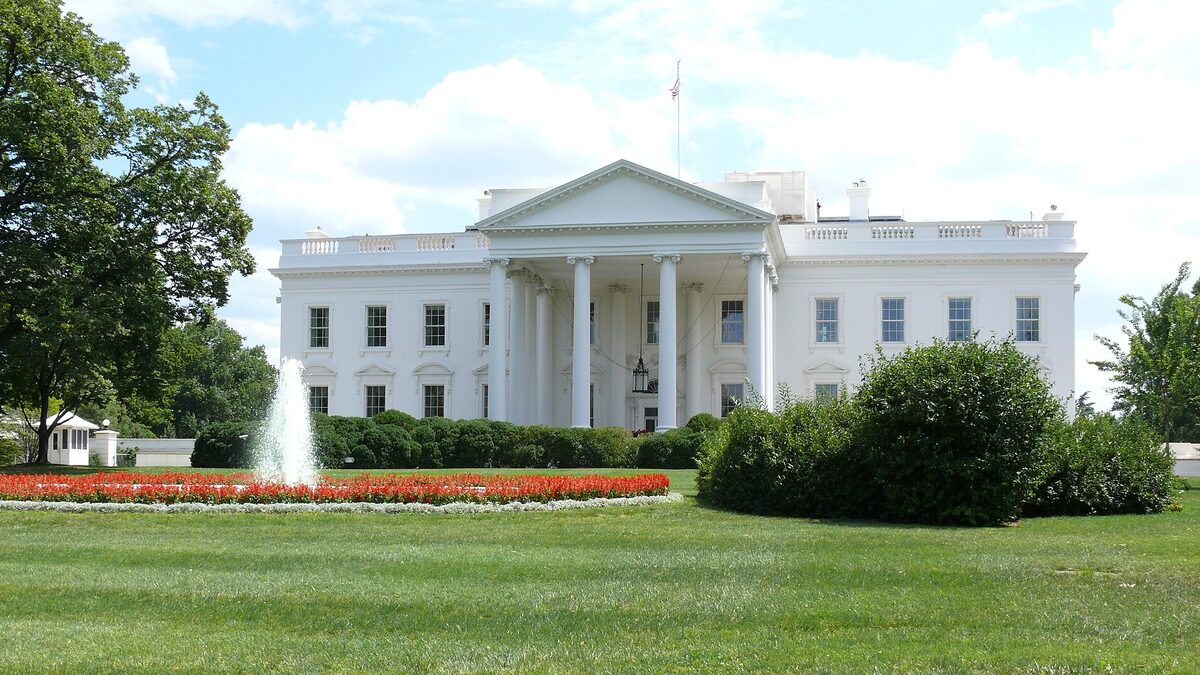
OpenAI built GPT-5.6 and then agreed not to ship it to you. At the request of the Trump administration, the company is releasing its newest model only to a small group of trusted partners first, with the White House approving who gets access one customer at a time.
The same week, Anthropic was cleared to push Claude Mythos 5 to roughly 100 US institutions. Both releases ran through the government before they reached the market, and that is the actual story here. It’s bigger than any single model. For the first time, a US administration is sitting between a frontier AI lab and its customers, deciding who is allowed to use the most capable systems before the public can. Two weeks ago the same government forced Anthropic to disable Mythos entirely. Now it’s handing out access like a license. The shift happened fast, with no new statute behind it, and almost no public debate. If you build on these models, or compete with the companies that do, the rules just changed.
What “trusted partners” gating means
When OpenAI ships a normal model, it lands in ChatGPT and the API, and anyone with a credit card can call it. GPT-5.6 is different. CEO Sam Altman told staff in a Wednesday Q&A that the federal government had asked OpenAI to stagger the launch, and in a Thursday memo he said Washington would be “approving access customer by customer” during the preview phase. The model goes to a select group of close partners, and each one is cleared individually before they’re switched on.
The request came from two White House offices: the Office of the National Cyber Director and the Office of Science and Technology Policy. According to Axios, they asked OpenAI to limit the rollout while the administration builds a framework for testing and evaluating the security of new models. There’s no precedent for this in a commercial AI launch. Export controls have blocked sales to specific foreign buyers before, but vetting domestic customers of a US company, one account at a time, is a different kind of gate.
The three models in the family are GPT-5.6 Sol, Terra, and Luna, splitting flagship, balanced, and low-cost tiers. OpenAI plans broader availability “in the coming weeks,” and Altman said in his memo that he hoped to open it up a couple of weeks later if the limited rollout goes smoothly. For now, the company is sharing the model only with partners whose participation, per TechCrunch, “has been shared with the government.”
Why the government wants a look first
The rationale is cybersecurity, and it’s concrete. All three GPT-5.6 tiers carry a “High” rating for both cyber and biological capability under OpenAI’s Preparedness Framework, the first time a single OpenAI release has hit that bar across every price point. A frontier model rated “High” on cyber is, in TechCrunch’s framing, capable of identifying and exploiting software vulnerabilities at speeds no human analyst could match. Put that in the hands of a hostile actor and it becomes an offensive weapon against any organization running complex infrastructure.
We’ve already seen what these systems do on the defensive side. OpenAI is using GPT-5.5 to find and patch open-source bugs at scale, and Anthropic sent Mythos 5 to cyberdefenders and government agencies precisely because it’s good at this work. The capability cuts both ways. The model that helps you close a vulnerability is the same model that helps someone else find it.
This is also a reversal for an administration that started out hands-off on AI. A June executive order now directs frontier labs to voluntarily submit new models for government testing before public release. The GPT-5.6 arrangement is the first time that policy has bitten on an actual launch. OpenAI didn’t fight it, but it didn’t pretend to love it either. The company said in a Friday blog post that it doesn’t believe “this kind of government access process should become the long-term default,” and Altman told staff the company had made clear to Washington that “this is not our preferred long term model.”
Anthropic ended up in the same place
The clearest sign this is a pattern, not a one-off, is what happened to Anthropic. The administration imposed export controls on Claude Mythos in mid-June and the company had to disable both Mythos and Fable 5 for every user. That block lasted two weeks while Anthropic and the government held what reporting describes as intense daily negotiations.
On Friday, Commerce Secretary Howard Lutnick wrote to Anthropic chief compute officer Tom Brown that, per 9to5Mac, he had “determined that appropriate safeguards are in place to permit certain trusted partners to access the Claude Mythos 5 Model.” Lutnick cited “significant progress” in the talks. More than 100 companies and institutions, many of them Fortune 500, now have Mythos 5. The public still doesn’t.
The triggers that got Anthropic blocked are worth sitting with, because they show how the gate gets opened and shut. Reporting points to two: Amazon CEO Andy Jassy reportedly told Treasury Secretary Scott Bessent about a purported jailbreak that left Anthropic’s models open to misuse, and the White House had separate worries about China’s access to the model. A rival’s warning and a geopolitical concern, between them, took a shipped product off the market for two weeks. Then a Cabinet secretary’s letter put it back, for a chosen hundred.
The precedent that outlasts these models
GPT-5.6 will get a wider release. Mythos already has its hundred institutions. The models aren’t the durable part. The durable part is the mechanism: a working channel where the executive branch reviews frontier AI releases and decides distribution, customer by customer, on national-security grounds. That channel now exists, it has been used twice in one month, and it didn’t require a single new law.
For smaller labs and open-weight projects, the implication is uncomfortable. If “High” capability ratings become the trigger for government review, the next powerful open release faces a choice that OpenAI and Anthropic, with their direct lines to Cabinet secretaries, can negotiate around. A startup or an overseas team shipping open weights has no such line. The gate is easiest to pass for the players who are already inside the building.
What this means for you
If you’re building on frontier models, assume access is now a policy variable, not just a pricing one. The capability you can buy may depend on whether your use case, your sector, and in some cases your company clear a government review you’ll never see. Plan for a model you depend on to become unavailable for two weeks, the way Mythos did, with little warning. Keep a fallback on a lower-tier or open-weight model that isn’t subject to this gating, even if it’s a step down.
Watch the framework the White House is writing. If the customer-by-customer vetting hardens into the default OpenAI fears, the open frontier as we’ve known it, where the newest model is a public API call away, is the thing that quietly ends. The next launch after GPT-5.6 is the tell. If it ships clean to everyone, this was a one-time scare. If it ships to a list, it’s the new shape of the market.
Share this article
Sources
- OpenAI limits GPT-5.6 rollout after government request, says restrictions shouldn't be the norm — TechCrunch
- The White House is asking OpenAI to slow roll the release of its new model over safety concerns — TechCrunch
- Trump administration asks OpenAI to limit release of GPT-5.6 — Axios
- Anthropic cleared to release Claude Mythos 5 to over 100 US institutions — 9to5Mac
Frequently Asked
- What does 'trusted partners' actually mean for GPT-5.6?
- It means OpenAI is not putting GPT-5.6 in ChatGPT or its API for everyone. A small set of enterprise customers gets access first, and the White House signs off on each one before they're added during the preview period.
- Who in the government is deciding access?
- Two White House offices: the Office of the National Cyber Director and the Office of Science and Technology Policy. They asked OpenAI to stagger the launch while the administration builds a framework for testing model security.
- Why are these models considered a national-security risk?
- All three GPT-5.6 tiers carry a 'High' rating for cyber and biological capability under OpenAI's own Preparedness Framework. A model that can find and exploit software flaws faster than any human analyst is dangerous in the wrong hands.
- Is this legally required?
- No. OpenAI complied with a request, not a statute. A June executive order directs frontier labs to voluntarily submit new models for government testing before public release, but the customer-by-customer vetting is an arrangement, not a law.
- Will GPT-5.6 ever get a normal public launch?
- OpenAI says it hopes to open access more broadly within a couple of weeks and has told the government this gating 'is not our preferred long term model.' Whether that holds depends on the safety framework the White House is still writing.