Google's Magic Pointer turns the cursor into a Gemini prompt. The first Googlebooks ship this fall.
Google announced Googlebook on May 12: a premium laptop tier above Chromebook, with a Gemini-aware cursor called Magic Pointer. Acer, ASUS, Dell, HP, and Lenovo are in.
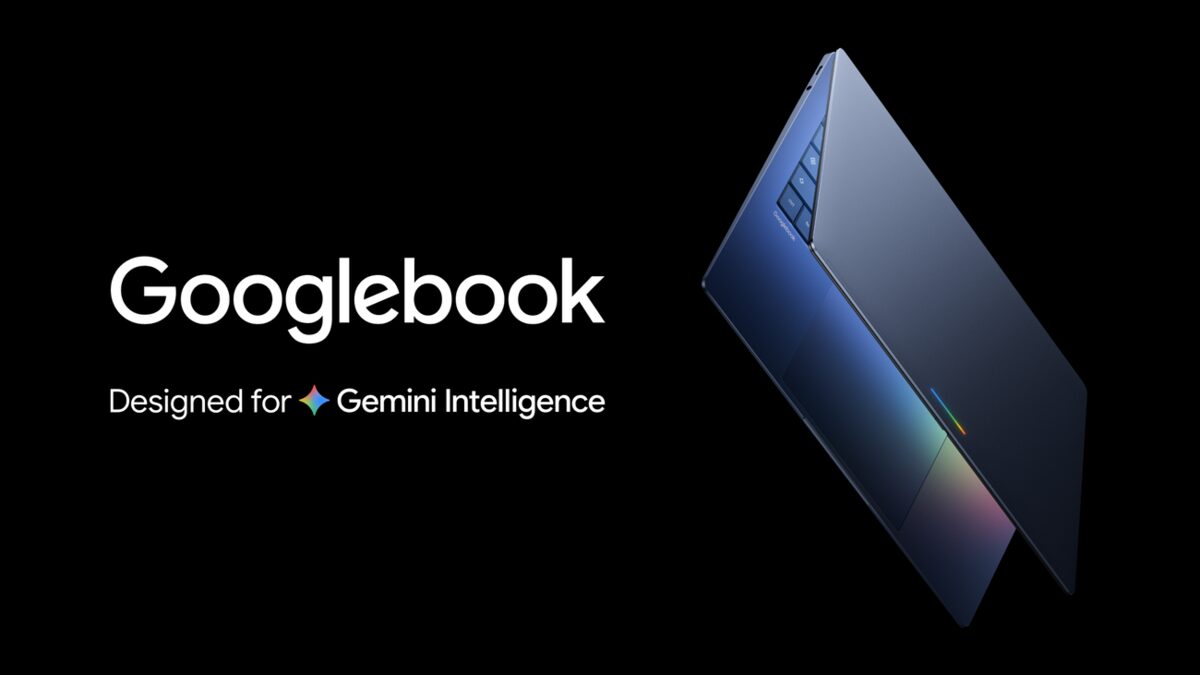
Google rolled out Googlebook on May 12 at the Android Show: I/O Edition, a week before Google I/O 2026 opens. The pitch: a new premium laptop tier built around Gemini, hybrid Android + ChromeOS underneath, and a headline feature DeepMind calls Magic Pointer. Acer, ASUS, Dell, HP, and Lenovo are in. Devices ship this fall.
The announcement post came from Alex Kuscher, Google’s Senior Director of Laptops and Tablets, on the company blog. DeepMind dropped a companion design post the same day, attributed to Adrien Baranes and Rob Marchant. The two posts together are the clearest Google has been about what an “AI-native laptop” actually means in product terms, and they answer a question that’s been hanging since the iPad Pro era: if the cursor was the right idea for desktop, what does the cursor look like when the OS speaks intent?
What Magic Pointer actually is
The Magic Pointer reads the screen, not just the click target. DeepMind frames its design around four principles: keep the user in their app instead of routing them to a chat window, capture visual and semantic context automatically, support “this” and “that” as the natural prompt vocabulary, and treat pixels on screen as actionable entities rather than image tiles.
In practice, that means you wiggle the cursor over a paragraph in a PDF and ask “fix this,” and Gemini already knows the paragraph is a sentence, the PDF is a draft email, and “fix” probably means tighten the grammar. You point at a table and say “make it a pie chart,” and the system extracts the numbers without a copy-paste. You point at an image of a couch and say “where would this go in my living room?” and the system pulls in a previous photo you shared. DeepMind’s demos in AI Studio cover image editing and map-based place discovery; both are linked from the blog post.
The interaction model matters more than any single demo. Cursor-as-intent is a small shift on paper. In practice it removes the prompt-engineering step from the average ask, which is the friction point that’s kept AI features as opt-in panels on every other operating system for the last two years.
How the OS fits together
Googlebook is not Chrome OS with a new badge. It’s a hybrid: parts of Android (Play Store, app runtime, phone-pairing primitives) bolted onto a ChromeOS base that keeps Chrome as the headline browser. The official line uses the phrase “part of the Android tech stack,” which is Google-speak for “we have not yet drawn the line and won’t on launch day.” Reports from 9to5Google say select existing Chromebooks will be upgradable to the Googlebook stack, which is a hint that the underlying kernel and Android compatibility layer are shared.
Three Android-derived capabilities are headline features. Cast My Apps runs Android phone apps on the laptop without installation, similar to Samsung DeX but routed through Google’s runtime. Quick Access mounts the phone’s file system into the laptop’s file browser if you’re on Android 17+. Create My Widget is a natural-language widget builder that pulls data from Gmail, Calendar, and Google Search and renders a custom dashboard tile. The widget feature reads as Google’s answer to macOS Stage Manager and Windows widgets, with the Gemini layer doing the assembly.
The hardware story is OEM-driven. Acer, ASUS, Dell, HP, and Lenovo are building the launch lineup, with a shared design element called the glowbar, an LED accent on the exterior that lights up during certain Gemini interactions. Pricing isn’t published, and Google is letting OEMs handle the tiers. The tagline “intelligence is the new spec” reads as Google’s argument for why a Googlebook should command a higher ASP than a ChromeOS device with comparable silicon.
Why this lands now
Three forces converged on the May 12 reveal. The first is the Samsung Galaxy Book Android pivot earlier this month, which signaled that Android-on-laptop is the consensus path for Google’s hardware partners. The second is Apple’s announced AI model marketplace in iOS 27 opening Siri to third-party models, which removes a competitive moat Google has been planning against. The third is the I/O 2026 keynote opening May 19, which needs a laptop story for the first time in years.
The bet underneath all three is that the “AI-native” framing is the next platform shift, not a feature checkbox. Google is taking the strongest position any major OS vendor has staked out so far: it’s spinning up a new brand, dragging five top OEMs onto a shared design constraint, and routing both Android and ChromeOS into one runtime. That’s a bigger commitment than Apple’s “Apple Intelligence” or Microsoft’s Copilot+ PCs, both of which left the core OS intact. Whether Googlebook ships the right developer surface is the open question.
The caveats
Magic Pointer’s cloud dependency isn’t documented. The DeepMind blog talks principles, not architecture. Until the AI Studio demos show offline behavior or Google publishes Gemini Nano specs for Googlebook, the safest assumption is that the headline interactions require a round trip to Google’s servers. That’s fine on a fixed-line laptop and worse on cellular models the OEMs are likely to ship.
The Android app story has a runtime tax. Existing Chromebooks already run Android apps via a container, and the experience has been merely okay since 2019. Googlebook needs to be visibly better at it than Chromebook is, or the “best of Android” framing reads as marketing. The path to “visibly better” runs through the OEM hardware, which means the early reviews will turn on whether Lenovo and Dell have actually built Snapdragon X Elite or MediaTek Kompanio Ultra machines that compete with Apple Silicon on battery life.
Privacy hasn’t been spelled out. A cursor that reads everything you’re pointing at is a different threat model than a tab that gets summarized when you ask. Google’s data and retention story for Magic Pointer hasn’t been published, and the demos run in AI Studio terms of service that aren’t the same as consumer Gemini’s. The auditable question for the launch is whether Magic Pointer’s screen capture is opt-in per app, per session, or per device.
What this means for you
If you’ve been waiting for an AI-first laptop with the broader app catalog of Android and the browser polish of ChromeOS, the Googlebook is the first credible shot at that combination. Wait for fall reviews before pre-ordering: the hardware will define whether this is a real Mac/Windows competitor or a premium-priced ChromeOS variant.
If you’re already on a Chromebook, watch the upgrade path. The 9to5Google reporting suggests select existing models will move to the Googlebook stack, which would extend their useful life without a hardware refresh. Confirm your model is on the list before any spring-clean device decisions.
If you build for Android or ChromeOS, the API surface is the interesting layer. Magic Pointer’s reach into app content implies a new permission model. Google’s developer docs at I/O on May 19 will tell you whether your app’s UI is automatically pointable or whether you’ll be writing entity annotations into every layout file. Either way, plan on revisiting accessibility and screen-reader paths in the same review pass; the systems that surface UI semantics to a screen reader are the ones Magic Pointer leans on first.
Share this article
Sources
- Introducing Googlebook, designed for Gemini Intelligence — Google
- Reimagining the mouse pointer for the AI era — Google DeepMind
- Googlebook product page — Google
- DeepMind details Googlebook 'Magic Pointer' with demos you can try — 9to5Google
- 'Googlebooks' have a premium focus, some Chromebooks can be upgraded — 9to5Google
- Google unveils Googlebook, a new line of AI-native laptops — TechCrunch
Frequently Asked
- Is Googlebook replacing Chromebook?
- No. Google framed Googlebook as a premium tier above Chromebook. The Chromebook brand continues, and 9to5Google reports some existing Chromebooks will be upgradable to the new Googlebook stack.
- What chip is in a Googlebook?
- Google didn't disclose chipsets at the May 12 reveal. OEM partners (Acer, ASUS, Dell, HP, Lenovo) will pick their own silicon for fall launches. Expect a mix of Snapdragon X Elite, MediaTek Kompanio Ultra, and Intel/AMD x86 parts based on tier.
- Does Magic Pointer work offline?
- DeepMind's blog hasn't said. The demos in AI Studio run cloud-side. On-device Gemini Nano models could plausibly back a subset of features, but Google hasn't committed to an offline mode at this point.
- Will Magic Pointer come to other laptops?
- Partly. Google said Magic Pointer is also coming to Gemini in Chrome on existing platforms, so the basic point-and-ask flow will reach macOS and Windows. The deeper system-wide integration is Googlebook-only at launch.
- When does Googlebook ship?
- Fall 2026. No pricing yet. OEMs handle pricing per device tier.