Timothy Gowers gave GPT 5.5 an open math problem. It returned a novel proof in 17 minutes.
The 1998 Fields Medal winner reports GPT 5.5 Pro produced a novel proof for an unsolved math problem in 17 minutes, and says the era of owning theorems is ending.
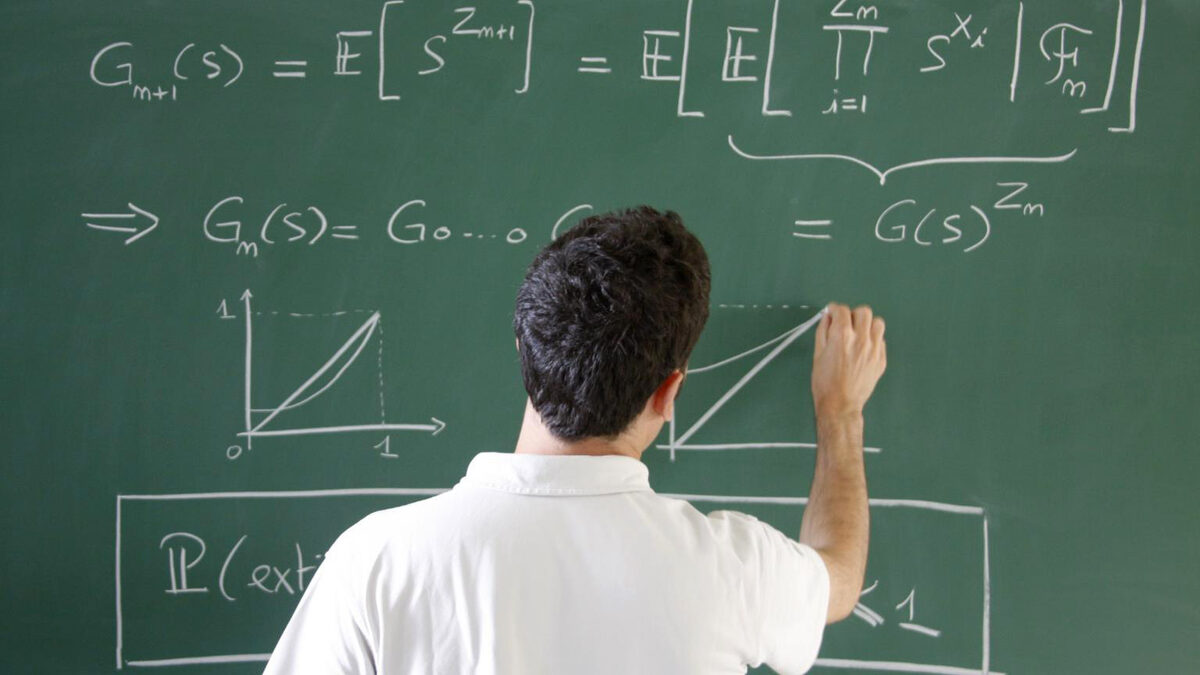
Timothy Gowers posted a 4,000-word account on May 8 of how GPT 5.5 Pro solved an open problem in additive number theory. The Cambridge professor and 1998 Fields Medal recipient didn’t watch the model regurgitate known mathematics. He watched it invent something new.
Gowers isn’t an AI booster testing a product demo. He’s one of the most decorated living mathematicians, and his conclusion after the session is that the field he’s spent 40 years in is about to change in ways most researchers haven’t internalized yet.
What happened
Gowers handed GPT 5.5 Pro a question from a Mel Nathanson paper about the diameter needed for sets with prescribed sumset sizes. The problem had an exponential upper bound. Nobody had improved it. In 16 minutes and 41 seconds, the model produced a quadratic improvement.
Isaac Rajagopal, a Cambridge PhD student who verified the proof, called it “almost certainly correct” at both the technical and conceptual levels. The key move: GPT 5.5 Pro proposed using h²-dissociated sets to construct efficient component sets. Rajagopal called the approach “completely original” and “quite ingenious,” not a recombination of known techniques but a genuinely novel mathematical idea.
Within 47 minutes, the model had written the result up in preprint form. Within another 13 minutes, it had attempted (and partially succeeded at) extending the result to a polynomial bound for the general case.
Gowers described the output as “the sort of idea I would be very proud to come up with after a week or two of pondering.”
The progression no one predicted
This wasn’t GPT’s first run at mathematics. An alphaXiv paper published earlier this year documented four new results produced with GPT-5’s assistance, all verified by human co-authors. But Gowers’s account carries particular weight because he’s not an AI researcher demonstrating a product. He’s among the most decorated living mathematicians, stress-testing whether AI changes his field.
His verdict is blunt: “It is no longer enough that somebody asks a problem: it needs to be hard enough for an LLM not to be able to solve it.”
He traces a clear progression in his blog post. Earlier LLMs could find pre-existing solutions in the literature. Then they started spotting “easy arguments that human mathematicians have missed.” Now, with GPT 5.5 Pro, they’re generating approaches that trained researchers call original. Each step was supposed to be the ceiling. None of them were.
What we don’t know
- Whether the polynomial-bound extension holds. Rajagopal flagged one specific gap in the general-case argument that needs checking before the result is complete.
- How many open problems across mathematics are now reachable. Gowers tested additive number theory; other subfields remain untested.
- Whether these results will survive formal peer review. As of May 9, they haven’t been submitted to a journal.
- What OpenAI changed between GPT-5 and GPT 5.5 Pro to unlock this capability. OpenAI hasn’t published technical details on the reasoning architecture updates.
What this means for you
Gowers’s most provocative claim isn’t about AI capability. It’s about incentives. “The era where you could enjoy the thrill of having your name forever associated with a particular theorem or definition may well be close to its end,” he writes.
He’s not despairing. He argues that mathematicians who’ve solved hard problems develop transferable meta-skills, the kind of intuition that makes them better AI collaborators. The ones who’ll struggle are researchers whose work consisted of picking low-hanging fruit, because that orchard is about to be swept clean.
For developers watching AI benchmarks, this is a reminder that mathematics isn’t just a leaderboard category anymore. When a Fields Medal winner says the model produced work he’d have been proud of, and it did it in 17 minutes, the question shifts from “can AI do research?” to “what kind of research can’t it do yet?”
Nobody has a confident answer to that second question. And that’s the part Gowers finds most unsettling.
Share this article
Sources
- A recent experience with ChatGPT 5.5 Pro — Gowers's Weblog
- Early science acceleration experiments with GPT-5 — alphaXiv
- Fields Medal Winner Timothy Gowers Says GPT-5 Came Up With A Math Proof — OfficeChai