An Illinois police chief tracked a woman's ex 140 times on Flock, with no warrant required
A McHenry County police chief faces felony charges for using Flock's plate-reader network to track people he knew. The case is fueling a push for warrants.
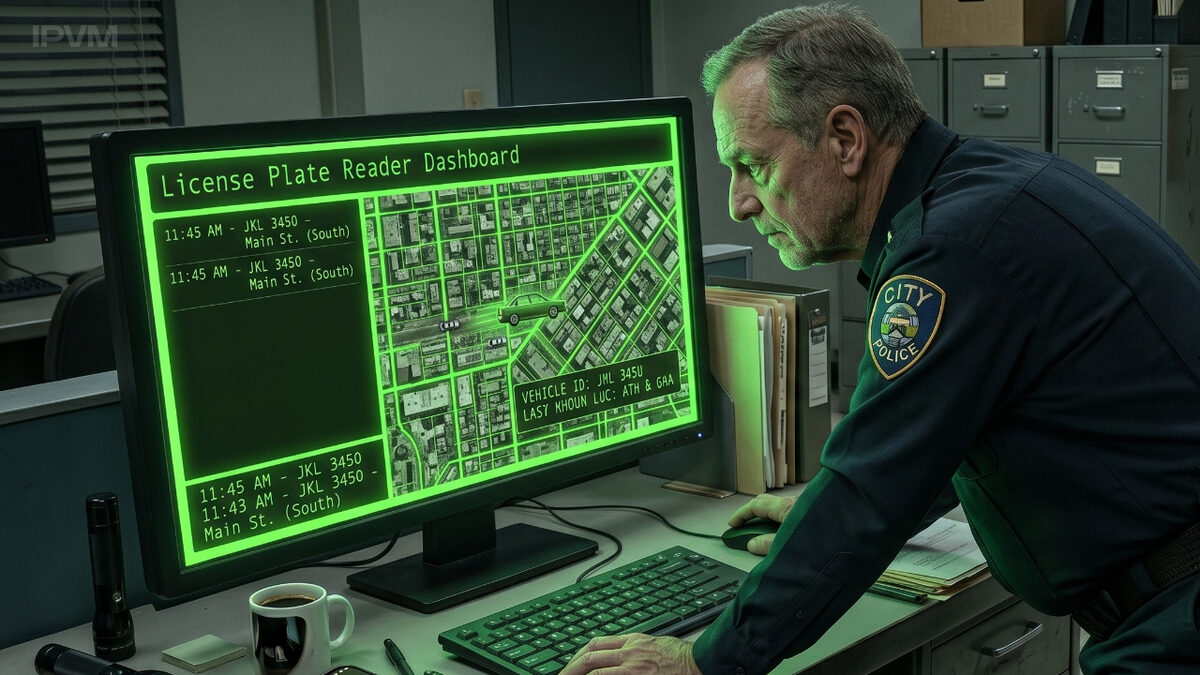
A McHenry County police chief ran a Flock plate-reader search on one man 140 times over five months. He never needed a warrant for a single one, and nobody reviewed why he was looking.
That chief, William C. Copp of Holiday Hills, Illinois, was arrested on June 18 and charged with two counts of official misconduct, a felony. Prosecutors say he used Flock Safety’s automated license-plate cameras to track six people he knew personally, including three women he’d had romantic relationships with. One of his targets was an ex-boyfriend of a woman he knew. Copp allegedly tracked that man 140 times and left him a voicemail: “This is the only time that I’m going to be nice about this.” The case has become the clearest argument yet in a debate that’s been simmering for two years: should police need a warrant before they can pull up where your car has been?
Copp isn’t an outlier. The Institute for Justice has counted at least 18 cases of officers using these systems to stalk romantic partners, and it calls that figure “almost certainly an undercount.” That’s the pattern researchers at surveillance-trade publication IPVM laid out in a report this month, and it’s why the warrant question stopped being abstract.
What Flock actually is
Flock Safety sells automated license-plate readers, or ALPR cameras, to police departments, homeowner associations, and businesses. The camera photographs every plate that passes, then logs the number, the location, and the timestamp. Do that across enough intersections and you get a searchable map of where any given car has been over weeks or months.
The scale is the part people underestimate. An EFF analysis examined more than 12 million searches run by over 3,900 agencies between December 2024 and October 2025. The networks are interconnected, so a single officer in one town can search cameras far outside their own jurisdiction. EFF found one Texas search that reached 83,345 cameras across nearly the entire country. Your local department doesn’t have to own a camera near you for someone, somewhere, to look you up.
And the cameras don’t distinguish suspects from anyone else. Every plate gets read and stored. That’s the design choice doing the damage: the system builds a location history on every driver first, and only later does a human decide whose history to pull.
How the abuse happens
The mechanic behind the Copp case is mundane, which is exactly why it keeps recurring. An officer with a login can run a search in seconds. No judge sees it. In many deployments, the officer doesn’t even have to name the crime they’re supposedly investigating.
The case files read like a catalog. IPVM’s report describes a Jerome County, Idaho sheriff who ran his own wife’s plate more than 700 times in three months and labeled the searches “test.” A Sedgwick, Kansas police chief queried an ex-girlfriend’s plate 164 times before resigning. A Costa Mesa, California officer reportedly kept using Flock to locate a woman even after being placed on administrative leave. A Braselton, Georgia chief was arrested in November 2025 after an audit surfaced his searches.
Flock’s own executives don’t dispute the pattern. The company’s chief legal officer, Dan Haley, acknowledged that “very rarely, someone does something stupid. They use it to figure out where an ex-girlfriend is or something like that. That’s actually the most common thing.” Read that twice. The company’s lawyer is saying the single most common form of misuse is officers tracking women they know.
The misuse runs past personal grudges. EFF’s review found more than 80 agencies running searches that used slurs and stereotypes targeting Romani people, often with no crime listed at all. It documented Texas deputies querying Flock data in an abortion investigation, with one search annotated “had an abortion, search for female.” It logged dozens of searches tied to the No Kings protests. The thread connecting all of it is that nobody had to ask permission first.
What makes these cases surface at all is usually an audit, not a safeguard built into the system. The Braselton chief was caught when his department reviewed its logs after the fact. Copp’s tracking spanned roughly 18 months, from February 2024 to November 2025, before charges came. The searches themselves leave a record, so an investigator can reconstruct them later, but nothing in the workflow stops a query in the moment. By the time anyone looks, the surveillance has already happened, sometimes hundreds of times against the same person. That’s the gap between a system that logs abuse and one that prevents it.
Why warrants are the fight
The reform on the table is narrow and old. Courts already require a warrant for the surveillance tools that ALPR most resembles. In Carpenter v. United States (2018), the Supreme Court held that police need a warrant to get a phone’s historical location records. Attaching a GPS tracker to a car requires one too. A wiretap requires one. The argument from privacy groups is that a searchable history of everywhere your car has driven is the same kind of intrusion, so it should clear the same bar.
A warrant requirement wouldn’t stop police from using Flock in a genuine emergency. The standard exigent-circumstances exception already lets officers act immediately when there’s an active threat, an Amber Alert, or a fleeing suspect. What it would change is the routine case: the bored login, the off-duty curiosity, the ex-partner lookup. A judge’s sign-off creates a record and a probable-cause threshold, which is precisely the friction that the Copp searches never had to survive.
Even Flock seems to see it coming. Haley told IPVM that “there will come a time where there needs to be a warrant requirement.” The company also pushes back on how its product is perceived. Its communications chief, Josh Thomas, said “there’s a common misconception that Flock tracks you wherever you go, and that’s just not the case.” The 83,345-camera search EFF documented is the kind of fact that statement has to contend with.
This isn’t the first time location data has slipped past the rules meant to govern it. We’ve seen Meta strip encryption from Instagram DMs and watched Volkswagen lock privacy-focused Android out of its app, each a reminder that the default setting on modern systems is “collect first.” Policy has been slower than the cameras. Some states, including Virginia, have moved to restrict ALPR use, and bills requiring warrants have surfaced in several legislatures, the same patchwork dynamic playing out in federal AI rulemaking.
What this means for you
Your car’s movements are almost certainly in one of these databases already, whether or not you’ve ever been suspected of anything. That’s not a hypothetical: with 83,000-plus cameras reachable from a single search, the question isn’t whether your plate has been logged but who can pull it up and why. The thing worth tracking now is your own state and city. Look up whether your local police use Flock (the company keeps a public transparency portal, and many departments list it), and check whether your state has any warrant or audit requirement on ALPR queries. If it doesn’t, an officer near you can do what Copp allegedly did, and the only thing standing between you and that search is whether someone decides to run it. The warrant debate is about putting a judge back in that gap.
Share this article
Quick reference
Sources
- Flock-Powered Police Chiefs Stalking Women Shows Why Warrants Are Needed — IPVM
- Prosecutors say McHenry County police chief used Flock license plate reader data hundreds of times to track people he knew — Lake and McHenry County Scanner
- EFF's Investigations Expose Flock Safety's Surveillance Abuses: 2025 in Review — Electronic Frontier Foundation
- Police Have Reportedly Used License Plate Readers to Stalk Romantic Interests at Least 18 Times in Recent Years — Institute for Justice
Frequently Asked
- What is an automated license-plate reader?
- It's a camera, usually on a pole or a police car, that photographs every passing plate and records the plate number, location, and time. Flock Safety runs the largest commercial network of them in the US.
- Can police search Flock data without a warrant?
- In most places, yes. An officer typically just logs in and runs a plate or a search term. There's no judge, no probable-cause showing, and often no requirement to state which crime they're investigating.
- Does Flock track everyone or just suspects?
- The cameras read every plate that passes, not just plates tied to a crime. So a query can pull the movement history of any driver, whether or not they're suspected of anything.
- What would a warrant requirement actually change?
- It would force police to get a judge's sign-off before querying the database, creating a paper trail and a probable-cause bar. Emergency exceptions for active threats would still allow immediate access.