Alibaba's Qwen3.8-Max beats Fable 5 on Terminal-Bench, and the weights go public next week
Qwen3.8-Max is a 2.4-trillion-parameter MoE that tops Claude Fable 5 on Terminal-Bench 2.1 and trails it badly on SWE-bench Pro. It's the first open Max-tier Qwen.
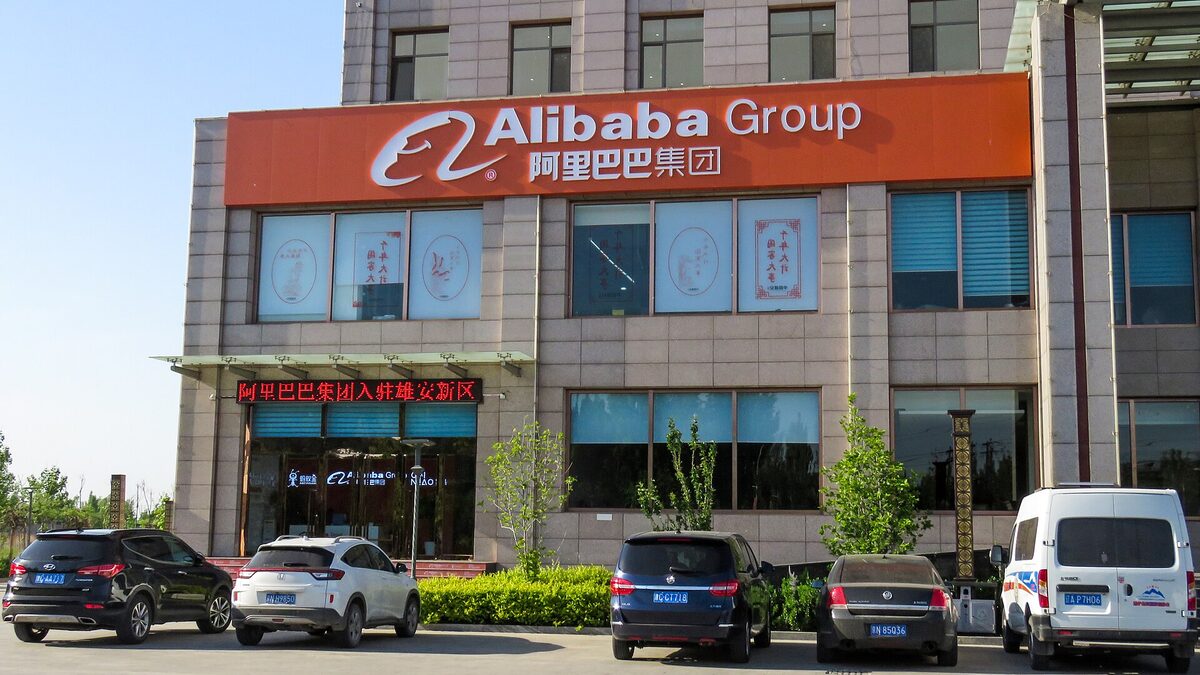
Alibaba shipped Qwen3.8-Max, and says the weights follow next week. That second half is the actual news. Qwen’s Max tier has been API-only for its whole existence, so a 2.4-trillion-parameter model landing on Hugging Face would be the largest open release anyone has committed to.
The benchmark story is split, and the split is the useful part. Qwen3.8-Max wins the agentic terminal work and loses the repository-scale software engineering work, by wide margins in both directions. If you’re picking a coding model on a leaderboard screenshot, you will pick wrong. That matters beyond one release: every frontier lab now publishes a benchmark table where the wins are foregrounded and the losses are three scrolls down, and the open-weight labs have the strongest incentive to do it because a download is a permanent artifact. Alibaba’s table is unusually honest about where it loses, which is the reason it’s worth reading closely rather than dismissing.
What shipped
The architecture is a MoE at 2.4 trillion total parameters, and Alibaba is positioning it for coding, knowledge work, multimodal understanding and long-horizon agent runs. Coverage of the release puts the activated count near 95 billion per request, though Alibaba’s own model card doesn’t state the figure, which is an odd omission for a release pitched on inference efficiency.
The concrete numbers, per MarkTechPost’s breakdown:
- Context: 1M tokens, with a 991K maximum input that drops to 983K once thinking is enabled, 131K maximum output, and a 262K reasoning budget.
- Price: $2 per million input tokens and $6 per million output, with implicit cache reads at $0.25 and explicit cache reads at $0.17.
- Modality: text, image and video in, text only out.
- Access: generally available on QwenCloud through both OpenAI-compatible and DashScope endpoints, with five built-in tools including
code_interpreterandweb_search.
Terminal-Bench 2.1 is where Alibaba planted its flag. Qwen3.8-Max scores 86.6 there, ahead of both Claude Opus 4.8 and Claude Fable 5 at 84.6, behind GPT-5.6 Sol in max mode at 88.8, as Neowin’s roundup lays out. It also takes PaperBench at 93.0 against Sol’s 90.5, IFBench at 82.8, GPQA Diamond at 92.6 and OSWorld-Verified at 86.1. The generational jumps are the loudest signal in the card: DeepSWE 1.1 went from 21.6 to 56.6 against Qwen3.7-Max, FrontierSWE from 40.7 to 73.5, JobBench from 31.3 to 53.4.
Where it loses
Then you scroll to the repo-scale benchmarks. SWE-bench Pro puts Qwen3.8-Max at 67.7 against Fable 5’s 80.0. FrontierSWE, despite that 33-point generational gain, still lands at 73.5 against Fable 5’s 88.8. Those two gaps are larger than the Terminal-Bench win, and they measure the thing most people actually buy a coding model for: making a correct change inside a large existing codebase.
A second caveat sits in the multimodal section. Alibaba’s 36 multimodal benchmarks compare against Qwen3.7-Plus, not the previous Max, so those deltas flatter the new model by choosing a weaker baseline. Alibaba also published an internal reinforcement-learning scaling curve that bends down after roughly 4,000 training environments, which is a candid thing to include and worth remembering the next time a lab implies scaling is monotonic.
Two things stay unknown until the download lands. The license hasn’t been announced, and “open weights” covers everything from Apache 2.0 to a bespoke agreement with a revenue cap, as Moonshot’s Kimi K3 release showed. Neither has Alibaba said whether the 27B sibling and the 2.4T flagship ship under the same terms.
What this means for you
If you run local models, the release you care about isn’t the flagship. Qwen3.8-27B shipped alongside it, and Unsloth’s Daniel Han put it inside 17GB of VRAM, which puts a current Qwen on a single consumer card. The r/LocalLLaMA thread announcing the pair cleared 1,700 upvotes and 378 comments in a day, and the poster who shared Han’s measurement wrote that the small model is the story: “Super excited about this release for the new 27B. Who else is with me. Only 17GB VRAM needed.” That’s the sentiment gap between what Alibaba is marketing and what practitioners will run.
If you’re evaluating the Max tier for agent work, benchmark it on your own repositories before you migrate anything. The Terminal-Bench result says it handles shell-and-tool loops well. The SWE-bench Pro result says it struggles where the diff has to be right the first time. Those are different jobs, and $2 per million input tokens buys you a lot of evaluation runs to find out which one you’re actually doing. Investors read the headline instead: Alibaba shares rose about 6% on the launch, Invezz reported. Wait for the weights and the license before you plan around it.
Share this article