Texas Instruments shipped the TI-84 Evo. $160, USB-C, 3x faster, still exam-approved.
TI's first big redesign of the TI-84 in over a decade ships April 28 with a 156 MHz Cortex chip, a 50% larger graphing area, and Python on board. Exam boards still approve it.
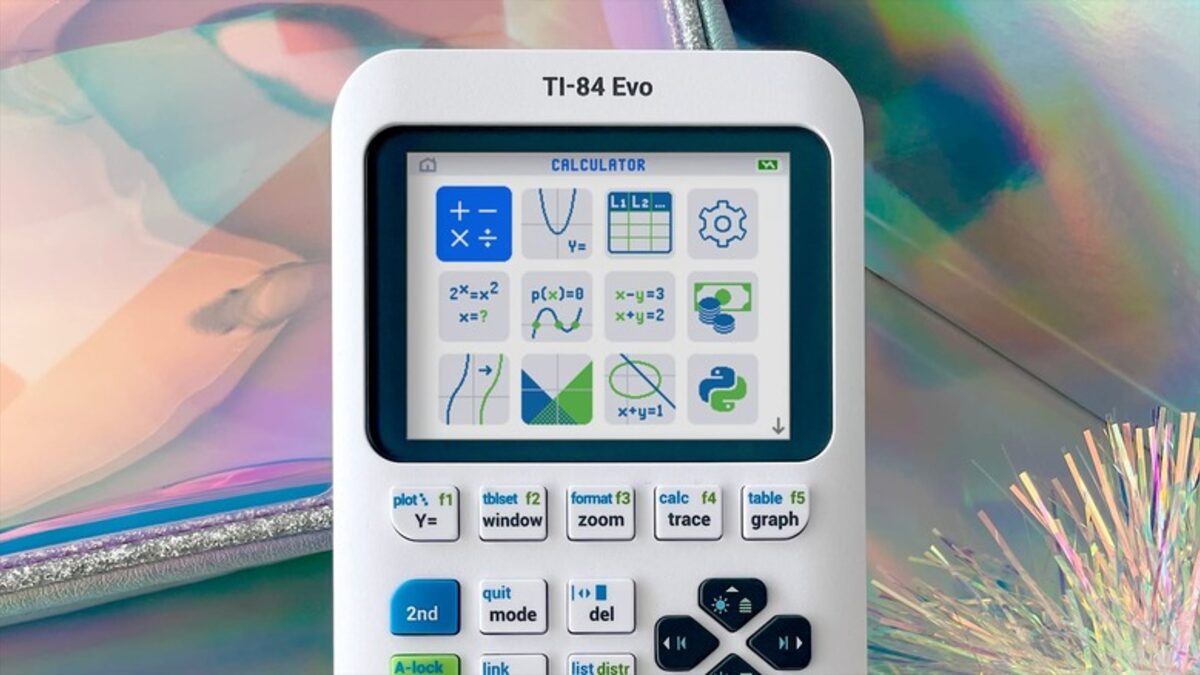
Texas Instruments shipped a new flagship TI-84 on April 28. The TI-84 Evo costs $160, charges over USB-C, runs roughly 3x faster than the Plus CE it replaces, and is the first big rework of the TI-84 since 2015. The catch is the same as it has always been: it has no Wi-Fi, no Bluetooth, no notifications, and that’s exactly what makes it sellable.
The exam boards still write the rules. SAT, ACT, AP, and IB all allow the Evo, and that approval is the entire reason TI keeps refreshing this calculator instead of letting a $5 phone app bury it.
What’s actually new
Inside the redesigned chassis is a 156 MHz ARM Cortex with 3.5 MB of user-available memory, per TI’s spec sheet. The screen stays at 320x240 pixels and 2.8 inches diagonal, but the graphing window grows by 50% to 319x209 pixels because the redesigned keypad gave back the row of bezel that used to eat into it. Battery is a built-in rechargeable, USB-C is the only port, and the device ships with a USB-A to USB-C cable so it can plug into the school computer carts that haven’t been refreshed yet.
Python is the headline software change. The Plus CE got Python in a 2021 hardware variant, but the Evo bakes it into the standard SKU and pairs the interpreter with TI-BASIC inside the same shell, so a student can call into the calculator’s math engine from a script. Six colors join the standard white: mint, pink, purple, teal, raspberry, and silver.
TI’s quote in the launch is the predictable one. “The TI-84 Evo represents our commitment to continuous innovation in educational technology,” said Laura Chambers, president of TI Education Technology, in the press release. The thing the press release doesn’t say out loud is that this is a calculator priced and specced to keep a captive market captive for another decade.
Why TI-84 still has the school market
Walk into any US high-school math classroom and the most advanced computer in the room is still a TI-84. Not because it’s the best tool for plotting a function (it isn’t, your phone is) but because the SAT and ACT explicitly approve it and explicitly ban anything that can talk to the internet. The exam-board approval list is the moat. As long as it holds, every parent who buys their kid a graphing calculator buys a TI, every teacher who builds a curriculum builds it around the menu layout, and every used Plus CE on eBay is worth roughly what a new one cost in 2015.
The Evo doesn’t change that. What it does is replace the three-year-old base model with one that charges off the same cable as the laptop next to it and won’t get bricked by the rechargeable Plus CE battery’s well-known capacity decay. The 50% bigger graphing window matters more than the headline 3x speed bump, because the speed of the Plus CE was already fine for the workloads exam boards allow.
How it stacks up against the Plus CE
The Plus CE is still on shelves, and TechSpot notes TI hasn’t announced a discontinuation date. Practically, school districts that are mid-cycle on the older model will burn through their inventory and refresh into the Evo over the next two or three procurement years. The Evo’s free four-year online-calculator license is the carrot for that switch: a teacher with a 10-pack on their desk gets 50 student licenses bundled in, which softens the per-student cost on a forced upgrade.
If you already own a Plus CE for personal use, there’s no reason to upgrade. The Evo is a nicer calculator, but the calculator is not the bottleneck on your homework.
What this means for you
If you’re shopping for a high-schooler heading into a math track that uses graphing calculators, buy the Evo. The USB-C port alone is worth the upgrade because the Plus CE’s micro-USB cable is the part most likely to be missing the morning of a test. Confirm with the school which model they teach to, and budget for the 4-pack of cables you’ll lose to the abyss between the bus and the kitchen counter.
If you’re an educator, the open question is the captive-market half. AP and IB are slower than the SAT and ACT to update approval lists, and a few districts have started piloting Desmos as the on-screen calculator for state assessments because it runs in any browser and costs nothing. None of that has dented TI’s volumes yet, but the Evo is also the first TI-84 that ships into a market where a phone app can match its math at zero marginal cost. The next refresh, whenever it lands, is the one where the exam boards’ rule set actually faces pressure.
Share this article
Sources
- TI-84 Evo Graphing Calculator product page — Texas Instruments
- Texas Instruments launches the TI-84 Evo Graphing Calculator — PR Newswire
- Texas Instruments made a new flagship graphing calculator: the TI-84 Evo — Engadget
- Texas Instruments refreshes its iconic calculator with the faster TI-84 Evo — TechSpot