Residents can't sleep. 29 million gallons vanished. Oregon sent the bill. Data centers are losing the neighborhood.
Three data center stories trended in one week: infrasound, 29M gallons of missing water, and Oregon forcing grid cost pass-through.
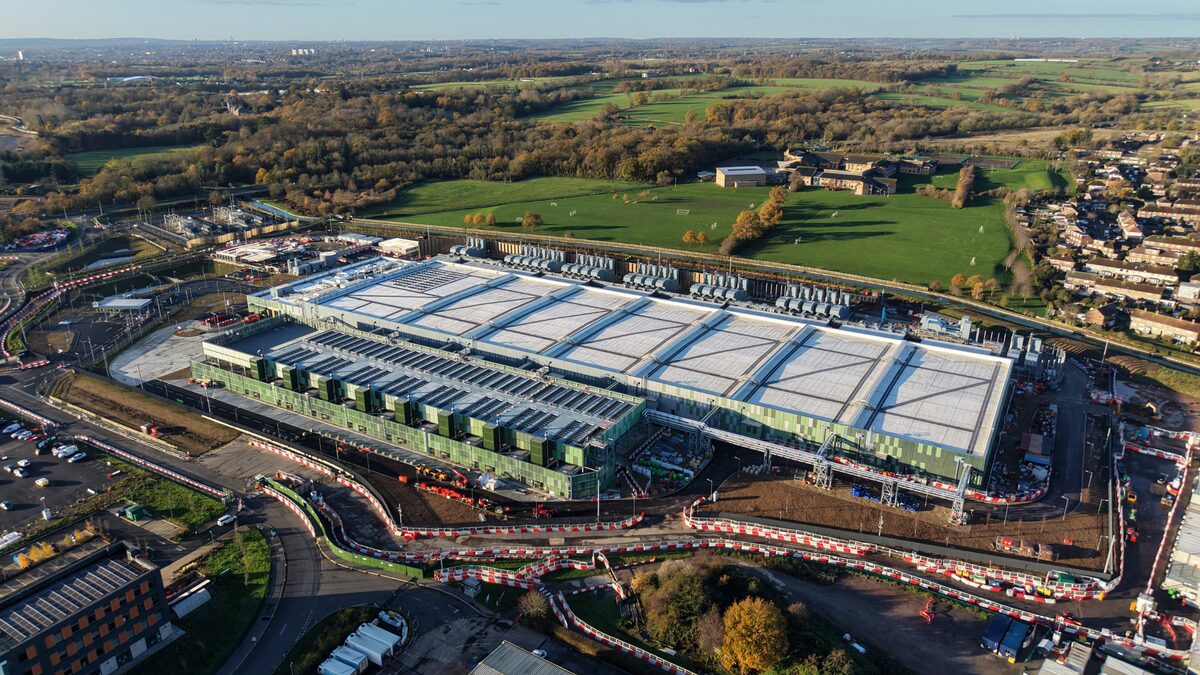
Three data center stories landed on Reddit’s front page in a single week, each with five-figure upvotes. One is about a hum you can’t hear that makes you sick. Another is about 29 million gallons of water that disappeared without a bill. The third is about a state that decided to stop subsidizing the power grid for facilities that consume as much electricity as small cities.
None of these stories are about the same company or the same state. But they’re about the same pattern: communities discovering what it actually means to live next to a hyperscale data center, and pushing back hard enough to move money and law.
The noise you can’t measure
Residents near data centers in Chandler, Arizona; Southaven, Mississippi; Prince William County, Virginia; and Lowell, Massachusetts are reporting the same symptoms: headaches, vertigo, nausea, sleep disruption, ear pain, and a constant hum that never stops. The problem is infrasound, low-frequency vibration produced by industrial cooling systems that sits below the 20 Hz threshold of human hearing.
Standard noise ordinances use A-weighted decibel meters. Those meters are designed to match what human ears can hear. Infrasound registers barely or not at all. Thomas Dompier, an associate professor at Lebanon Valley College, told Heatmap: “Infrasound permeates through concrete walls, it permeates through the ground.” You can’t block it with standard insulation and you can’t cite it with standard equipment.
The regulatory gap is structural. The EPA had federal noise oversight authority starting in the 1970s, but the Reagan administration defunded the agency’s noise control office in 1981. Since then, enforcement is entirely local. Most local noise ordinances were written for noisy block parties, not for cooling towers running 24/7 at frequencies human ears can’t register but human bodies can feel.
In Chandler, the city council unanimously rejected a proposed new AI data center in 2025, with noise complaints from a facility that arrived in 2014 driving much of the opposition. In Southaven, the NAACP has sued xAI over 46 unpermitted natural gas turbines powering its Colossus data center. In Lowell, ten residents filed suit to halt an expansion that would add 27 diesel generators and 16 cooling towers near homes, a park, and a preschool in an Environmental Justice community.
29 million gallons, no bill
In Fayetteville, Georgia, a Blackstone-owned data center operated by QTS consumed 29.86 million gallons of water through two unmetered connections over roughly 15 months. One hookup was installed without the utility’s knowledge. The other wasn’t linked to the company’s account and wasn’t being billed.
Residents in the nearby Annelise Park subdivision noticed the problem first. Their water pressure dropped. Their complaints led the Fayette County water utility to investigate, and the investigation found the unmetered connections.
The retroactive charge: $147,474. No fines were levied.
QTS is the number one consumer of water in Fayette County most months. Its campus covers 6.2 million square feet across 13 buildings, with plans for up to 16 at full buildout. James Clifton, a local attorney and property rights advocate, told E&E News: “We get this notification from Fayette County water system saying you need to stop watering your lawns to help conserve water. So the first thing they do is lean on the individuals and the citizens to stop water consumption when we have QTS that’s just absolutely draining us.”
Fayette County Water Director Vanessa Tigert’s explanation was blunt: “They’re our largest customer, and we have to be partners. It’s called customer service.”
The numbers at the industry level are staggering. A typical large data center uses 300,000 gallons per day, equivalent to about 1,000 households. Google’s largest facility in Council Bluffs, Iowa consumes 2.8 million gallons daily. Total US data center water use was 17.4 billion gallons in 2023. Brookings projects that could reach 38 to 73 billion gallons by 2028.
Oregon sends the bill
On May 8, the Oregon Public Utility Commission issued Order 26-154, creating a new rate classification for large data centers. Facilities using 20 or more megawatts must now pay 100% of the distribution infrastructure costs needed to serve them. Those above 100 megawatts pay an additional 1-cent-per-kilowatt-hour surcharge that funds energy-efficiency programs for low-income households.
The context: PGE has spent approximately $210 million on data center infrastructure in Hillsboro alone. Oregon residential bills rose nearly 50% over the last five years. Rep. Nathan Sosa, who sponsored the underlying POWER Act (HB 3546), told NBC16: “Our goal was to ensure that Oregon utility consumers would no longer be subsidizing the growth of data centers.”
Bob Jenks, executive director of the Oregon Citizens’ Utility Board, called the ruling “a win for Oregonians.” New data centers can only connect to PGE’s grid if emissions-free electricity is available to serve them, supporting Oregon’s 2040 deadline for 100% clean energy. Rate changes take effect June 10.
The scale of the pushback
These aren’t isolated incidents. At least $64 billion in US data center projects have been blocked or delayed by community opposition over the last two years. Twenty proposed data centers were canceled in Q1 2026 alone, representing $41.7 billion in planned investment and 3.5 GW of electricity demand. At least 142 activist groups across 24 states are now organizing, and 264 data center bills were introduced in state legislatures this year.
In Festus, Missouri, voters ousted all four incumbent council members who had approved a $6 billion data center project. In Virginia, voter comfort with new data centers collapsed from 69% in 2023 to 35% in 2026. At least 12 states have filed data center moratorium bills this year. Seattle passed a 365-day emergency moratorium. Georgia will ban new data centers starting July 1.
Data center opposition is bridging political lines that rarely align. Environmental concerns drive opposition on the left. Property rights and rural character drive it on the right. In Utah, hundreds protested a Kevin O’Leary-backed data center in Box Elder County at a packed commission meeting on May 4. AI data center backlash is threatening Pennsylvania GOP incumbents in the 2026 midterms. Congress has introduced H.R. 5227 to study data center impacts on rural America.
What this means for you
If you work in cloud infrastructure, these stories affect your cost structure. Oregon’s model, where data centers pay full grid expansion costs, is being watched by regulators in other states. PacifiCorp’s Oregon proceeding is expected later this year, and utility commissions in Virginia and Georgia are under similar pressure.
If you’re a developer or engineer, the physical infrastructure your code runs on is facing political friction at every stage: permitting, power, water, and noise. None of the hyperscalers’ “water positive by 2030” pledges address infrasound or grid cost subsidies. Google increased water consumption from 4.3 billion gallons in 2021 to 6.1 billion in 2024, despite its pledge. Google’s greenhouse gas emissions rose 51% against a commitment to halve them.
Robinson Meyer at Heatmap wrote recently: “The data center backlash isn’t close to peaking.” The numbers support him. We covered the Michigan Saline case last week, where a township vote against a $16 billion facility was overturned by lawsuit in five weeks. The data center got built. But 142 groups in 24 states are watching that playbook now, and they’re writing zoning moratoriums instead of waiting for the developer’s lawyer to arrive.
Share this article
Sources
- AI data centers face increasing infrasound complaints — Tom's Hardware
- Georgia residents seethe over 30M gallons of missing water — E&E News
- Oregon regulators set new rules for how PGE charges data centers — Oregon CUB
- 20 data centers canceled in Q1 2026 — The Cool Down
- The Loud Fight Over Inaudible Data Center Noise — Heatmap News
- AI data centers and water — Brookings Institution
Frequently Asked
- What is infrasound and why do data center neighbors complain about it?
- Infrasound is sound below the threshold of human hearing (roughly 20 Hz). Data center cooling systems produce it constantly. Residents near facilities report headaches, nausea, vertigo, and sleep disruption, but standard decibel meters used in noise ordinances don't capture it.
- How much water do data centers use?
- A typical large data center uses 300,000 gallons per day, equivalent to about 1,000 households. Google's largest facility in Iowa consumes 2.8 million gallons daily. Total US data center water use was 17.4 billion gallons in 2023 and is projected to reach 38-73 billion gallons by 2028.
- What did Oregon's new data center ruling change?
- The Oregon Public Utility Commission ordered data centers using 20+ megawatts to pay 100% of grid expansion costs, post deposits, sign 10-30 year contracts, and pay a 1-cent/kWh surcharge on facilities over 100 MW. Changes take effect June 10, 2026.
- How many data center projects have been blocked by communities?
- At least $64 billion in US data center projects have been blocked or delayed by local opposition in the last two years. Twenty projects were canceled in Q1 2026 alone, representing $41.7 billion and 3.5 GW of power demand.