Qualcomm is chasing a $10 billion AI-chip deal. The target is Jim Keller's RISC-V startup.
Qualcomm is in talks to buy Tenstorrent for up to $10 billion, per Reuters and The Information. The bet: a RISC-V challenger to Nvidia, not just phones.
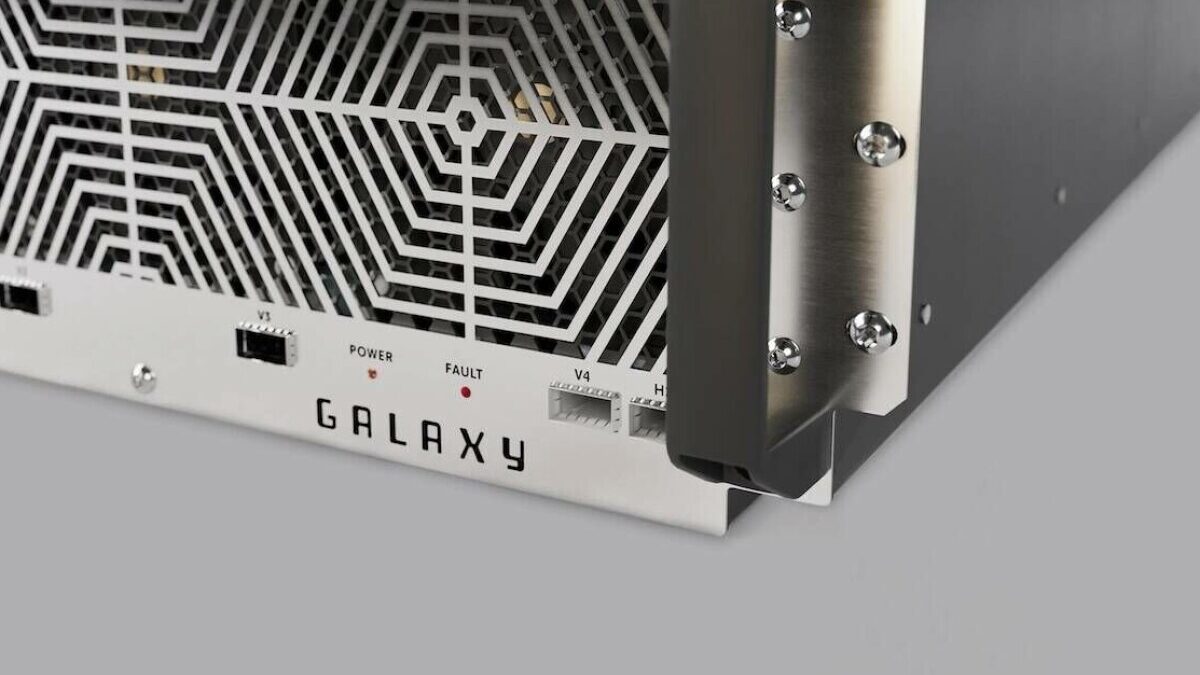
Qualcomm is in talks to buy Tenstorrent, the AI-chip startup run by Jim Keller. Reuters reported on June 15 that a deal could value the company between $8 billion and $10 billion, which would rank among the largest acquisitions in Qualcomm’s history. The prize isn’t another modem for your phone. It’s a foothold in the data-center AI market Nvidia owns.
Why it matters: Qualcomm built its empire on smartphone modems, and that market has stopped growing. A $10 billion bet on Tenstorrent would buy it an AI-accelerator architecture, a chiplet packaging team, and one of the most respected silicon designers alive, all aimed at the data center rather than the handset. It also lands in the middle of an AI-chip M&A wave, where every company that missed the Nvidia rocket is now trying to buy its way back in. For anyone who builds on AI hardware, a credible second source is the whole game.
What we know
- Qualcomm is in discussions to acquire Tenstorrent at a price of $8 billion to $10 billion, first reported by Reuters and corroborated by The Information.
- Tenstorrent designs AI accelerators built on RISC-V, the open instruction set, plus its own Tensix compute cores, chiplet packaging, and compiler stack, per The Register.
- The company is led by Jim Keller, the designer behind AMD’s Zen cores, Apple’s A4 and A5, Tesla’s first self-driving chip, and a stint running Intel’s silicon engineering group.
- Tenstorrent closed a $693 million round in late 2024, led by Samsung and AFW Partners with money from Jeff Bezos, at a roughly $2 billion valuation, The Register reported at the time. An $8B-to-$10B price would be four to five times that.
- Its Blackhole accelerators pack 768 RISC-V cores and claim 745 teraFLOPS at FP8, with specs Tenstorrent pitches against Nvidia’s A100 and L40S, according to The Register.
- Qualcomm wants to grow past smartphones, where revenue is slowing, and has been pushing into data-center silicon with its own AI accelerators and server roadmap.
What we don’t know
- Whether it closes. Reuters noted the talks are ongoing, the price could change, and the deal could still fall apart.
- The final number. The $8B-to-$10B band is a range, not a signed figure.
- What Keller does after. His name and his team are most of what Qualcomm is buying. Acquihires of founder-led chip shops have a mixed record once the founder vests out.
- How regulators react. A deal this size in AI silicon draws antitrust eyes in the US, EU, and likely China.
- Whether the RISC-V bet survives a Qualcomm that ships Arm cores in nearly everything it makes.
Who reported it
This started with Reuters, citing people familiar with the matter, and The Information, which put the valuation band at $8 billion to $10 billion. Reuters said it could not independently verify the report, and that Qualcomm and Tenstorrent did not respond to requests for comment. Trade outlets including The Register and igor’sLAB picked it up the next day. Treat every dollar figure as reported, not confirmed.
The strategic logic, though, isn’t a secret. Keller has been blunt about how Tenstorrent plans to fight a company that buys more accelerator memory than anyone else on Earth. “If you use HBM, you cannot beat Nvidia, because Nvidia buys the most HBM and has a cost advantage,” he told Bloomberg, explaining why Tenstorrent uses cheaper GDDR6 instead. His shorter version, from an EE Times interview: “Whatever Nvidia does, we’ll do the opposite.” Open software, open architecture, lower memory cost. That’s the pitch Qualcomm would be paying up to $10 billion for.
What this means for you
If you build or buy AI infrastructure, this is the second-source story you’ve been waiting for. Nvidia’s pricing holds because the alternatives are thin. A Qualcomm-funded Tenstorrent, with a chip vendor’s manufacturing relationships and balance sheet behind it, is a more credible threat than a startup burning a $693 million round. The RISC-V and open-stack angle matters too: if Keller’s “do the opposite” bet pays off, you get an inference accelerator that isn’t locked to CUDA and doesn’t price in Nvidia’s HBM premium. For developers, watch whether the software stays genuinely open after an acquirer takes over, because that’s the part that usually gets quietly walled off. None of this is real until a deal is signed. But the AI-chip M&A wave is here, and Qualcomm just told you where it thinks the next decade of margin lives: in the data center, not your pocket.
Share this article
Quick reference
Sources
- Qualcomm in Talks to Acquire AI Chip Startup Tenstorrent for Up to $10 Billion, Reuters Reports — Reuters via Yahoo Finance
- Qualcomm said to be circling AI chip biz Tenstorrent in $10B RISC-V power play — The Register
- Qualcomm is reportedly considering a Tenstorrent acquisition for up to 10 billion dollars — igor'sLAB
- Jim Keller: 'Whatever Nvidia Does, We'll Do The Opposite' — EE Times
- RISC-V's AI hero just got a $693M investment — The Register