Renault ditched rare-earth magnets in its EVs in 2012. China's export squeeze made that look smart
A Renault explainer on rare-earth-free EV motors hit Hacker News. Here's how electric cars run without the magnets China controls, and who's shipping them.
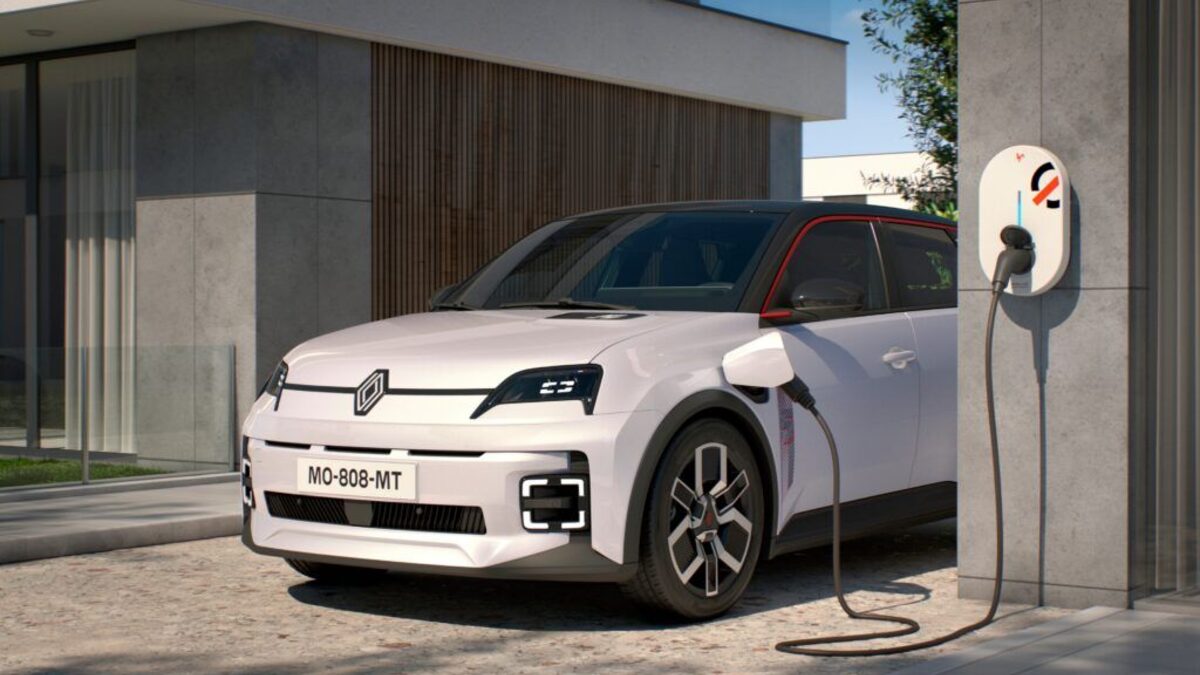
A Renault explainer on rare-earth-free electric motors climbed Hacker News this week. The timing is the story. While developers argued in the comments about brushes and slip rings, Beijing was busy turning the magnets inside almost every EV into a geopolitical lever.
Here’s the thing most coverage skips: Renault has built electric cars without those magnets since 2012. What looked like a quirky engineering choice for over a decade now looks like a hedge that paid off. The rest of the industry is scrambling to copy it, and the reason is sitting in China’s export-licensing rules.
What a rare-earth magnet actually does
Most EV motors are permanent-magnet synchronous motors. The rotor, the spinning part, carries permanent magnets made from neodymium, often with a dash of dysprosium or terbium to keep them stable when they get hot. Those magnets pull a strong magnetic field into a small, light package. More torque per kilogram, more range per charge. That’s why they won.
The catch is where the materials come from. China refines roughly 90% of the world’s rare-earth magnets and produces, per Renault’s own figures, 85% of the light rare earths and effectively all of the heavy ones. A motor magnet is a tidy little dependency on one country’s mining and processing industry.
So engineers asked an old question with new urgency: do you even need the magnet? You don’t. A motor needs a magnetic field on the rotor, but a permanent magnet is only one way to make one. Run electric current through a coil and you get a magnetic field too, one you can switch on, off, and tune. That’s a wound rotor, and it’s the heart of the rare-earth-free approach.
Two ways to drop the magnet
There are really two families here, and they make different bets.
The first is the EESM, the electrically excited synchronous motor. Renault’s whole EV line runs on it, starting with the 2012 Zoe and continuing through the Renault 5. Instead of magnets, the rotor has copper windings; feed them current and they become an electromagnet. BMW built its fifth-generation eDrive unit on the same principle. The magnetic field of the rotor comes from current flowing through coils, as BMW’s own engineering explainer puts it, so rare earths “can be omitted altogether.” It ships today in the i4, iX, i7 and i5.
The tradeoff: you have to get current onto a spinning rotor. BMW and Renault use brushes and slip rings, the same wear-prone contact parts that brushed motors have always used. ZF went a different route. Its I2SM motor uses an inductive exciter inside the rotor shaft to pass energy across without physical contact, which kills the wear problem and the drag losses that come with it. ZF says the I2SM matches magnet motors on power and torque density while cutting the motor’s production carbon footprint by up to 50%. Mahle’s magnet-free motor does something similar with contactless induction and claims efficiency above 95% across almost every operating point, a number that until recently belonged to Formula E.
The second family keeps a magnet but ditches the rare earth in it. Ferrite magnets, the cheap black ones in fridge magnets and speakers, are made from iron oxide. They’re far weaker than neodymium, so a ferrite motor has to work harder geometrically, packing the magnets into the rotor in a “spoke” layout and accepting a bigger, heavier rotor for the same output. It’s a real engineering compromise, but the material is abundant and cheap and politically boring. That last part is the whole point.
Why automakers care now, not in 2019
The wound-rotor idea isn’t new. What changed is the supply chain turned into a weapon.
Through 2025, China moved rare-earth and magnet exports under a licensing regime and then sharpened it. From December 1, 2025, firms with any tie to a foreign military are largely denied export licenses outright, and the rules reach extraterritorially: a magnet made anywhere on earth needs Chinese sign-off if it contains even 0.1% Chinese-sourced rare earth or was made with Chinese processing tech. Beijing has since paused parts of that escalation until late 2026, but the message landed. The lever exists, and it can be pulled.
For a carmaker, a motor that needs no rare-earth magnet is a motor that can’t be held hostage by an export license. That’s a procurement argument, not a green one, though the carbon math helps too. It also reframes a cost story: rare-earth prices spike on geopolitical news, and a ferrite or wound-rotor design simply isn’t exposed to that volatility. When the input you removed is the one your rival can’t reliably buy, “we don’t use it” becomes a competitive position.
Renault leaned into exactly that. Its next-generation E7A motor, co-developed with Valeo and due in 2027, is a wound-rotor design rated at 200 kW with 92% efficiency on an 800-volt architecture. The company isn’t treating rare-earth-free as a constraint to apologize for. It’s the headline feature.
Who’s actually shipping, and who’s just talking
Sorting the press releases from the production lines matters here, because the gap is wide.
Shipping today: Renault, across its whole EV range, and BMW, in four current models. Those are real cars on real roads with no rare-earth magnets in the traction motor. ZF and Mahle are suppliers with production-intent designs and innovation awards, which means a carmaker still has to pick them and put them in a vehicle.
Then there’s Tesla. At its 2023 Investor Day, VP of powertrain engineering Colin Campbell said the company had designed its next drive unit to use a permanent-magnet motor that needs no rare earths at all:
“We have designed our next drive unit, which uses a permanent magnet motor, to not use any rare earth materials at all.”
That was a striking claim, because keeping a permanent magnet while dropping the rare earth implies a ferrite-type design at Tesla’s performance bar. Three years on, the motor still hasn’t entered production, and Tesla won’t say what’s in it, calling the recipe a trade secret. So the honest status is: announced, not proven. The same caveat applies to anyone promising ferrite parity with neodymium at sports-car power levels. The physics is unforgiving, and a slide deck isn’t a teardown.
This isn’t the only place the EV supply chain is being re-engineered around cost and sourcing. It rhymes with GM’s $900 million bet on a cheaper battery chemistry and, more broadly, with the way hardware roadmaps now route around geopolitical chokepoints the way they used to route around Nvidia’s grip on local AI compute.
Why you’re hearing about this now
The Renault piece went up months ago. It resurfaced on Hacker News in the same window that China’s export rules made every neodymium magnet a question mark, and that’s not a coincidence. Rare-earth-free motors stopped being a curiosity the moment the magnet supply became someone else’s policy decision.
If you’re tracking which EVs are insulated from the next rare-earth squeeze, watch the motor spec, not the marketing. A wound-rotor or EESM badge means the car runs no matter what Beijing licenses next quarter. A permanent-magnet motor that’s quietly gone ferrite is harder to verify but counts too. And treat any “rare-earth-free” promise that hasn’t shipped, Tesla’s included, as a roadmap, not a product, until there’s a motor you can actually buy.
Share this article
Quick reference
Sources
- All about electric motors with no rare earths — Renault Group
- BMW's externally-excited electric motor explained — BMW Blog
- Tesla is going (back) to EV motors with no rare earth elements — Electrek
- ZF makes magnet-free electric motor uniquely compact and competitive — ZF
- MAHLE develops highly efficient magnet-free electric motor — MAHLE
- China's new rare earth and magnet restrictions threaten US supply chains — CSIS
Frequently Asked
- What are rare-earth magnets, and why do EV motors use them?
- They're permanent magnets made with elements like neodymium and dysprosium. They pack a strong magnetic field into a small, light rotor, which is why most EV motors use them: more power and range per kilogram.
- How can an electric motor work without rare-earth magnets?
- Two main ways. A wound-rotor motor runs current through coils to create the magnetic field on demand instead of using a permanent magnet. A ferrite-magnet motor swaps the rare-earth magnet for a cheaper, weaker iron-based one and changes the rotor geometry to compensate.
- Do rare-earth-free motors perform worse?
- There's a tradeoff. Wound-rotor motors add weight and complexity and lose a little efficiency at some speeds, but they're efficient at highway cruising and need no scarce materials. Suppliers like BMW and ZF say their latest designs match magnet motors on power and torque density.
- Why is this a bigger deal in 2026 than it was a few years ago?
- China refines roughly 90% of the world's rare-earth magnets and spent 2025 turning export licensing into leverage. Automakers that don't depend on those magnets are insulated from that pressure.
- Which carmakers actually ship rare-earth-free motors today?
- Renault (since the 2012 Zoe) and BMW (the i4, iX, i7 and i5) ship wound-rotor motors now. ZF and Mahle have magnet-free designs aimed at production. Tesla has announced one but hasn't shipped it.