Samsung won more than $200 billion of Broadcom chip work through 2030
Samsung signed an MOU with Broadcom worth more than $200 billion through 2030 across memory, 2nm foundry and advanced packaging. Nvidia locked up SK Hynix the same day.
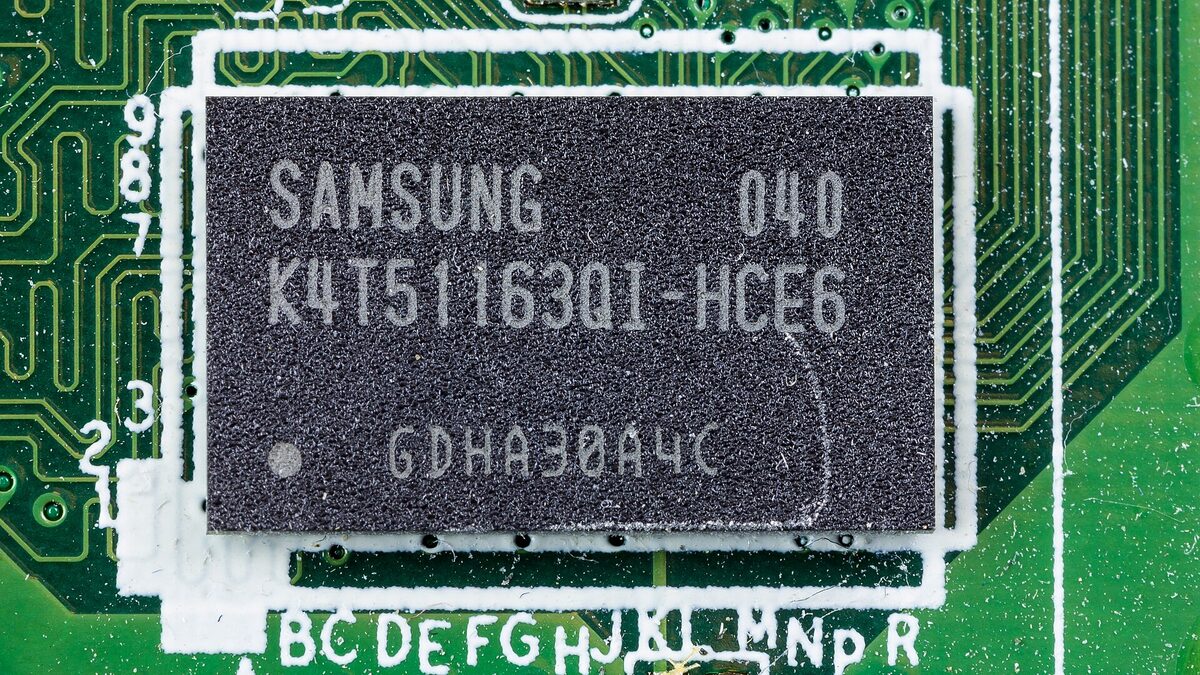
Samsung Electronics signed a deal with Broadcom worth more than $200 billion through 2030. The pact spans memory supply, foundry work on 2nm and below, and advanced packaging. Samsung’s contract chip arm has spent years as a distant second to TSMC. It finally has a named anchor customer for the rest of the decade.
Nvidia and SK Group landed their own pact the same weekend, valued above $500 billion, with SK Hynix signing on for long-term AI memory supply. Counting everything announced around the San Francisco summit, South Korea’s two biggest chip groups closed roughly $950 billion in commitments, layered on top of the country’s own $576 billion state chip program. The pattern beats any single figure. AI buyers have stopped ordering capacity quarter by quarter and started reserving it years out, and there’s only so much leading-edge wafer and HBM to reserve.
What we know
Samsung’s own announcement puts the collaboration above $200 billion across memory and foundry over five years, through 2030. Samsung will supply HBM for Broadcom’s next-generation AI accelerators. Its foundry will build Broadcom parts on 2nm-class and smaller nodes, and the release names Wireless Broadband Communications products specifically. Packaging is in scope too: 2.3D and 2.5D integration on the 2nm process, the trick that puts memory physically closer to logic.
The signing happened at the AI Summit at The Midway in San Francisco, with Jinman Han, head of Samsung’s Foundry Business, and Broadcom president and CEO Hock Tan both in the room, according to Samsung. “AI is driving unprecedented demand for tightly integrated semiconductor technologies spanning memory, logic and advanced packaging,” said Young Hyun Jun, vice chairman and CEO of Samsung’s Device Solutions division. Broadcom’s semiconductor group president, Charlie Kawwas, described the goal as combining “Samsung’s memory and foundry expertise with Broadcom’s AI and connectivity leadership.”
Scale check. Samsung Foundry booked a little over $3.2 billion in the first quarter of 2026 for a 6.5% share of the market, while TSMC took $35.86 billion and 72.3%, per TrendForce. Broadcom is one of the world’s leading custom AI chip designers, and its ASIC volume is exactly the kind of steady work that fills a fab. Samsung’s previous marquee logic win, a $16.5 billion order from Tesla in 2025, looks small next to this one, as Reuters noted.
What we don’t know
An MOU isn’t a purchase order. Samsung’s release describes the $200 billion as what the two companies expect the collaboration to be worth, and neither side published wafer volumes, pricing, or exit terms.
Which Broadcom silicon actually moves is the bigger question. Broadcom’s custom accelerators, including the XPU it is co-designing with OpenAI, have been TSMC work for years. Samsung’s announcement attaches the 2nm logic collaboration to communications products and puts HBM on the accelerator side, so nothing published so far commits an accelerator tapeout to Samsung. Yield is the other unknown. Samsung’s 2nm-class ramp has to hold at volume, and that 6.5% share is partly a story about customers who tried Samsung once and didn’t come back.
Where the numbers come from
Reuters first reported the $200 billion figure and the sub-2nm detail on Saturday, and Samsung published the MOU the same day. The Nvidia side comes from the companies’ joint release: a 2-gigawatt SK Telecom AI factory running Nvidia Vera Rubin systems on SK Hynix HBM4, first site due online in 2027. “South Korea has all the ingredients to become a global AI powerhouse,” Jensen Huang said in that statement. The $950 billion aggregate is South Korea’s presidential office talking, reported by Reuters after President Lee Jae Myung’s summit, and CNBC covered the memory-supply leg on its own. Nvidia, for its part, already takes almost all data-center AI chip revenue.
What this means for you
The squeeze is the part that reaches past Korea. TrendForce expects server DRAM contract prices to rise 13% to 18% quarter on quarter in the third quarter of 2026, and it says those increases now land mainly on buyers without long-term agreements, plus any extra volume that agreement holders want beyond their contracted bits. Broadcom and Nvidia just signed that kind of multi-year commitment at a scale nobody else can match. That’s the asymmetry. So if you’re speccing servers, buying workstation memory, or waiting on a phone refresh, you’re bidding for what’s left after 2030-dated reservations are carved out. Two practical moves: get memory pricing in writing wherever a vendor will sign it, and plan budgets on DDR5 staying expensive into 2027. The first real test is Samsung’s 2nm yield. If it slips, this $200 billion stays a press release.
Share this article
Quick reference
Sources
- Samsung Electronics and Broadcom Expand Strategic Collaboration Across Memory and Foundry Technologies — Samsung Global Newsroom
- Samsung Elec wins $200 billion Broadcom AI chip partnership, boosting foundry push — Reuters (via Euronext)
- SK Group and NVIDIA Expand Strategic Partnership Across AI Factories and Next-Generation Memory — Nvidia via GlobeNewswire
- Samsung Elec, SK Group seal $950 bln deals as South Korea hosts AI powers — Reuters
- Strong AI Demand and Early Consumer Electronics Inventory Build Drive Top 10 Foundries to 3.7% QoQ Revenue Growth in 1Q26 — TrendForce
- Long-Term Agreements Cap Price Increases; Server DRAM Contract Prices Expected to Rise 13-18% QoQ in 3Q26 — TrendForce
- Nvidia locks down memory supply from SK Hynix as part of $500 billion AI deal — CNBC