Tim Cook says heavy Siri AI users may buy more compute on iCloud+. The plan isn't finished
On his final earnings call, Tim Cook said Apple will offer Siri AI upgrades through iCloud+ for heavy users. No price and no tier have been announced.
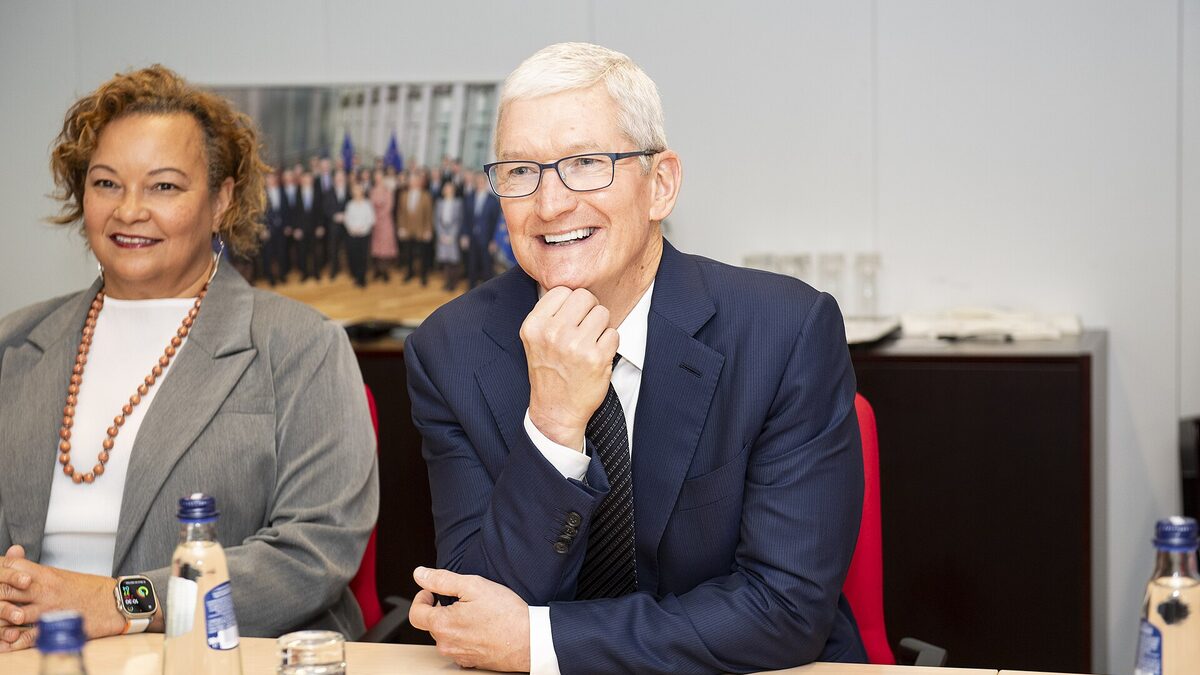
Apple may start metering Siri AI, and Tim Cook said so on the record. On the company’s fiscal third-quarter earnings call on July 30, Cook said Apple will have “some kind of upgrade possibilities on iCloud Plus where people can buy up the stack.” No tier exists yet. No price either.
Apple Intelligence has been free since launch, and that was the pitch. Light work runs on the device, hard work goes to Apple’s own servers under Private Cloud Compute, and Apple says nobody, itself included, can read what lands there. A paid tier reframes that architecture. The requests worth an upsell are precisely the ones that leave the phone, which turns the privacy story into a billable line on an iCloud+ invoice.
What Cook actually said
The question came from Goldman Sachs analyst Michael Ng, who wanted to know how Apple plans to cover the cost of running Siri AI. Cook neither dodged it nor committed to anything. “It’s obviously early going for us, and so I don’t want to say that we have a complete plan for that,” he said, before naming iCloud+ as the mechanism and adding, “we’ll see how the pickup for that is.” TechCrunch pulled the exchange out as a story the next morning and read it as a paywall aimed at power users. This didn’t leak. Apple said it on its own call.
Four things are on the record:
- iCloud+ is the vehicle. Cook pointed at the existing storage subscription, which runs from $0.99 a month for 50GB to $59.99 for 12TB, rather than at a new standalone Siri product.
- Siri AI is already shipping. Apple introduced it on June 8, built on foundation models that run, in Apple’s words, “on device and on servers using Private Cloud Compute.” The broader rollout is set for this fall.
- The quarter paid for the question. Apple posted $109.4 billion in revenue, up 16% year over year, with Services at a June-quarter record of $30.7 billion and paid subscriptions past 1.5 billion.
- On-device stays the hedge. Cook called the ability to run some share of requests locally “very strategic and sort of a competitive weapon”.
The privacy pitch gets a price tag
Paying for more compute means the work happens somewhere other than the phone. That lands differently at Apple than it would at Google or OpenAI, because on-device processing is the argument Apple has used to explain why its assistant deserves more trust than a chatbot. Siri AI’s hardest requests already run on Apple silicon servers, on a custom Google Gemini model Apple reportedly pays around $1 billion a year to license. An iCloud+ upgrade would put a number on how much of that server time a customer gets.
There’s a duller reading, and it’s probably the right one: Apple wants the bill covered. CFO Kevan Parekh told analysts the company runs “a hybrid model” for AI capacity, “so we use some third-party cloud and we do our own data centers, and so there will be a mix.” Cook said Apple has “been growing our OPEX and spending more in AI in general. Quite a bit more,” and noted those costs surface in several places on the P&L, not just operating expenses. Apple has never been shy about recurring revenue. It already turned hardware into a monthly payment through a Klarna-backed lease. OpenAI is solving the same math from the opposite end, by selling ads inside ChatGPT.
What nobody has answered
Almost everything. Cook described an upgrade path, not a ceiling, so it’s unclear whether free Siri AI carries a request limit at all. Nobody has said what an upgrade would cost, whether it rides the current storage tiers or arrives as a separate add-on, or how a unit of Siri compute gets counted in the first place. Apple also hasn’t said whether the tier lands with the fall rollout or months after it. And Cook won’t be the one to answer: this was his last earnings call as CEO, with John Ternus taking over on September 1 and Cook moving to executive chairman.
What this means for you
If you already pay $2.99 a month for 200GB of iCloud+, watch that line on the bill. The likeliest shape is that Siri AI compute becomes a reason to climb a storage tier you don’t otherwise need, the way HomeKit Secure Video camera limits already nudge people from 50GB to 2TB. Nothing has been announced, so there’s nothing to sign up for or cancel today. What’s useful now is knowing which requests leave your phone: personal-context lookups and long reasoning go to the server, while dictation and the expressive voices stay on-device on hardware with enough memory. If Apple meters this, heavy users pay and timer-setters won’t notice. My read: a tier arrives after the fall launch rather than with it, once Apple has a quarter of real usage data to price against.
Share this article
Quick reference
Sources
- One last time, this is Tim: Final transcript of Apple's Q3 2026 earnings call — Six Colors
- Siri AI could come with a paywall for power users — TechCrunch
- Apple reports third quarter results — Apple
- Apple introduces Siri AI, a profoundly more capable and personal assistant — Apple
- Private Cloud Compute: A new frontier for AI privacy in the cloud — Apple Security Research
- Tim Cook Thanks Shareholders on His Final Apple Earnings Call — MacRumors