Apple is testing Chinese memory chips for iPhones and Macs despite a bipartisan Senate warning
The Wall Street Journal says Apple is qualifying CXMT DRAM for iPhones and MacBooks. Export rules bar the spec work Apple normally does with a supplier.
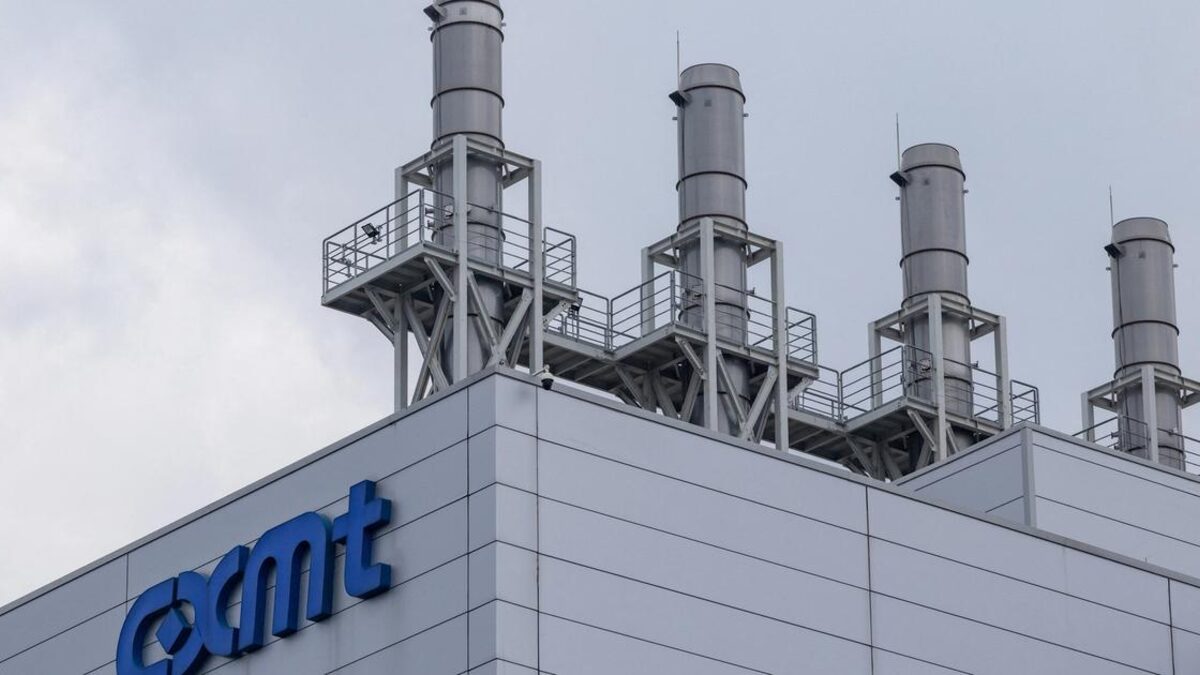
Apple is qualifying memory chips from China’s CXMT for iPhones and MacBooks. The Wall Street Journal reported it on Sunday. Eleven days earlier, seven US senators had written to Tim Cook asking Apple to rule the supplier out entirely, in any product, anywhere.
The timing is the story. Apple has spent 2026 raising prices and blaming memory, and the cheapest way out of that runs through a company Washington would rather it never called. Every phone, laptop and console maker is stuck in the same vice: the three firms that make almost all the world’s DRAM have pointed their best capacity at AI accelerators, and everyone building consumer hardware is bidding for what’s left. Apple is the largest buyer of that leftover supply, so where Apple goes, the rest of the industry’s cost floor follows. This is the first time its answer has run through a company on a Pentagon watchlist.
What the reporting says
Testing spans iPhones, MacBooks and other products, and Apple has held early discussions with CXMT about supplying memory for devices sold inside China, according to the Journal’s reporting as relayed by Reuters. Semafor adds that Apple is seeking White House sign-off for the China-market version of that plan. Apple has confirmed none of it.
The constraint underneath is unusual. US rules let an American company buy CXMT parts off the shelf and haggle over price, but they bar sharing technology with the firm, and that includes the specification back-and-forth Apple normally runs with a memory vendor for years before a part ships. Buying commodity DRAM from a catalogue is legal. Co-engineering it isn’t. Anyone who has watched Apple’s supply chain knows how much of its component advantage comes from exactly the work it can’t do here.
CXMT’s numbers explain why Apple is looking anyway. Second-quarter revenue rose more than eightfold, its share of global DRAM revenue reached 7%, and it plans to more than double output by 2028. It has also already sold out its 2026 capacity, so a deal signed today buys parts in some later year. Meanwhile Samsung, SK Hynix and Micron keep steering wafers toward high-margin HBM for AI accelerators, which is the same squeeze that pushed a gigabyte of RAM from $2.80 to $12 and put €200 on the price of an Xbox. Global PC shipments fell 4% year over year last quarter. Smartphones fell 11%.
What the senators want
The July 29 letter is blunter than most congressional correspondence. “We urge Apple to abandon any effort to incorporate memory from CXMT, YMTC, or any other Chinese state-backed supplier into any of its products,” the senators wrote. Both firms appear on the Pentagon’s 1260H list of companies it judges to support China’s military, updated in June.
The letter’s sharpest paragraph goes after the China-only framing directly. Confining CXMT memory to devices sold in China “cannot be expected to hold, because once a part clears qualification for Apple production, extending it worldwide is a single procurement decision away,” the senators argued. That is a supply-chain observation rather than a political one, and it happens to be correct: qualification is the expensive gate, and geography is a line in a bill of materials.
Jim Banks of Indiana and Chuck Schumer of New York led the letter, joined by Mike Crapo, Jeanne Shaheen, Andy Kim, James Risch and Pete Ricketts. “American companies shouldn’t reward Chinese military-linked firms with their business,” Banks said. Apple has until August 21 to respond, and had said nothing publicly as of Monday.
What nobody has confirmed
Four things stay open as of August 10, and each one changes how big this story turns out to be.
- Whether qualification passed. Testing a part and shipping it are separated by months of yield and reliability data that nobody outside Cupertino has seen.
- Which products. iPhone and MacBook are named in the reporting. Storage, wearables and the iPad line are not.
- What the White House said. Semafor reports Apple asked. No answer has surfaced, and a US-China summit is on the calendar.
- Volume. CXMT is two to three generations behind Samsung, SK Hynix and Micron on process, per CNBC’s assessment, so this reads as second-source relief rather than a swap.
What this means for you
Nothing here lowers the price of a phone you buy this year. CXMT has no spare 2026 capacity, qualification runs long, and the political path is unresolved, so the earliest this shows up in a bill of materials is 2027. Watch August 21 instead. If Apple answers the senators with a commitment, the memory crunch keeps landing on retail prices through the iPhone 18 cycle and Apple absorbs it or passes it on. If Apple answers with a careful non-commitment, that’s the tell that CXMT parts are further along than the word “testing” suggests. Either way, the useful lesson for anyone speccing hardware right now is that commodity DRAM has become a geopolitical component. Budget for it the way you’d budget for a tariff, not a part.
Share this article
Quick reference
Sources
- Apple tests CXMT memory chips as AI boom fuels global supply crunch, WSJ reports — Reuters
- Apple tests Chinese memory chips — Semafor
- Senators Warn Apple Not to Buy Memory Chips From Chinese Firms — Bloomberg
- Senators Press Apple to Rule Out Using Memory From Chinese Military Companies — The Epoch Times
- Letter to Apple CEO Tim Cook regarding PRC memory producers — United States Senate
- Apple tests China's CXMT memory chips as AI boom squeezes supplies — Seeking Alpha